KRS - Backpack
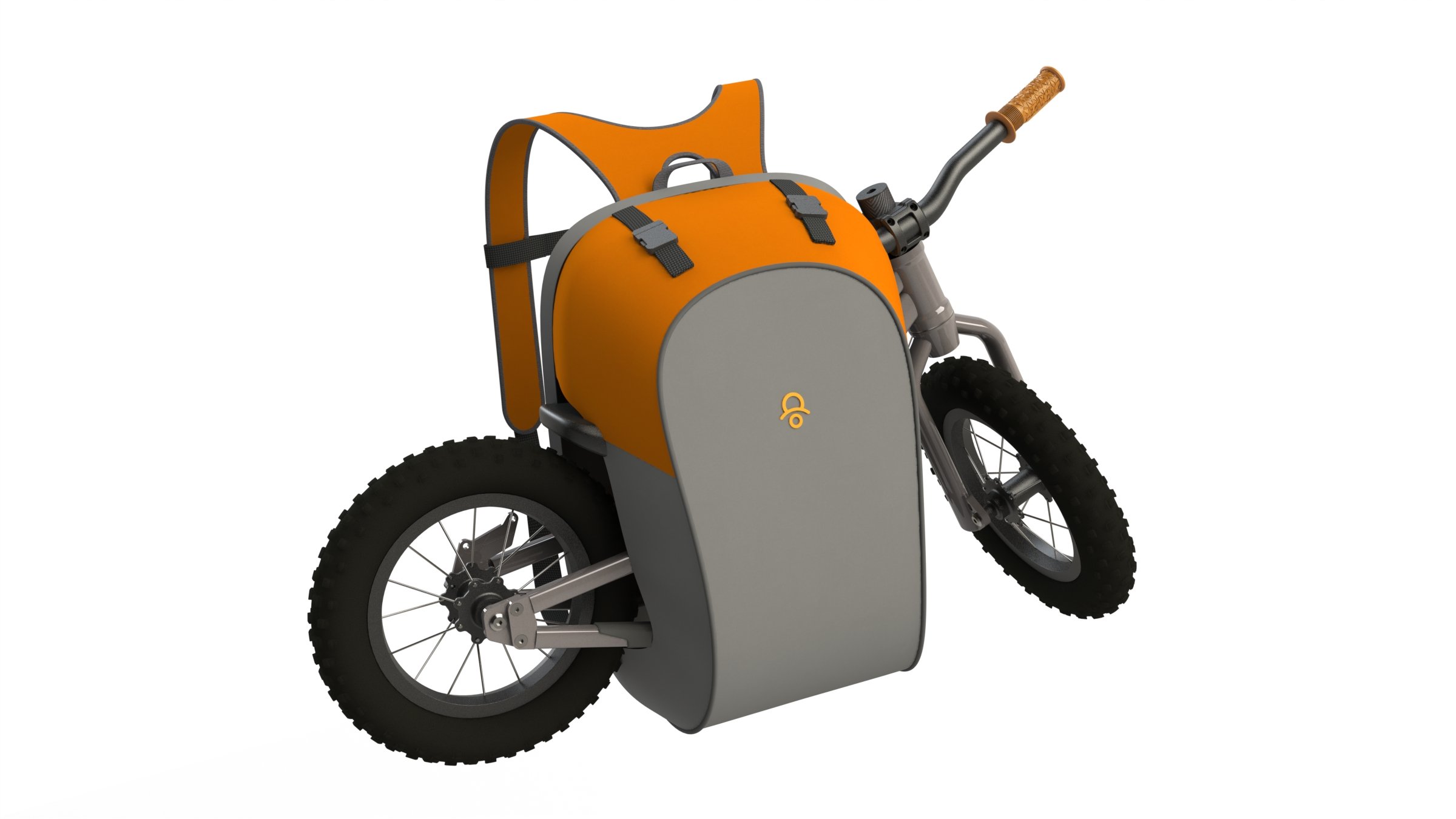
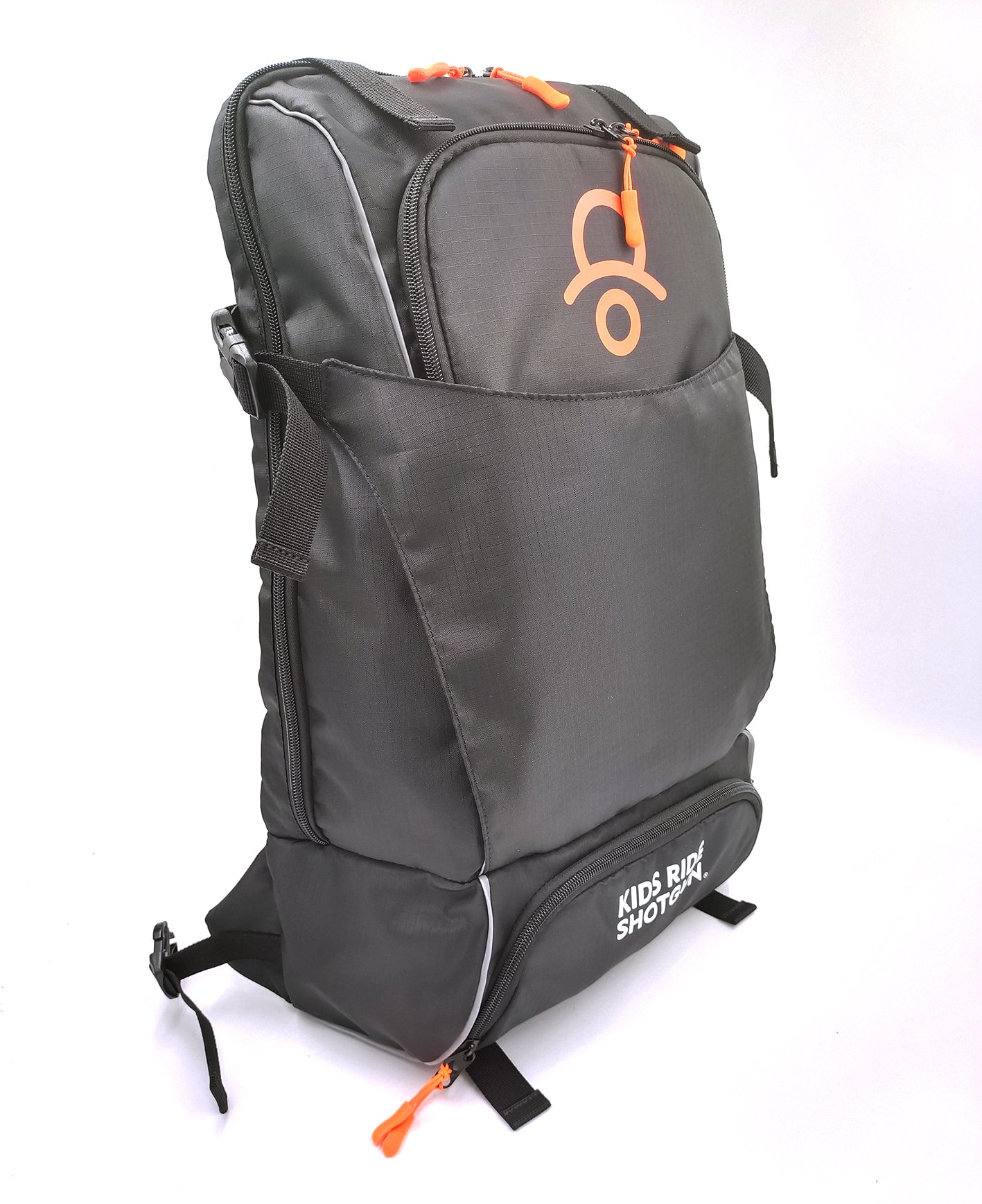
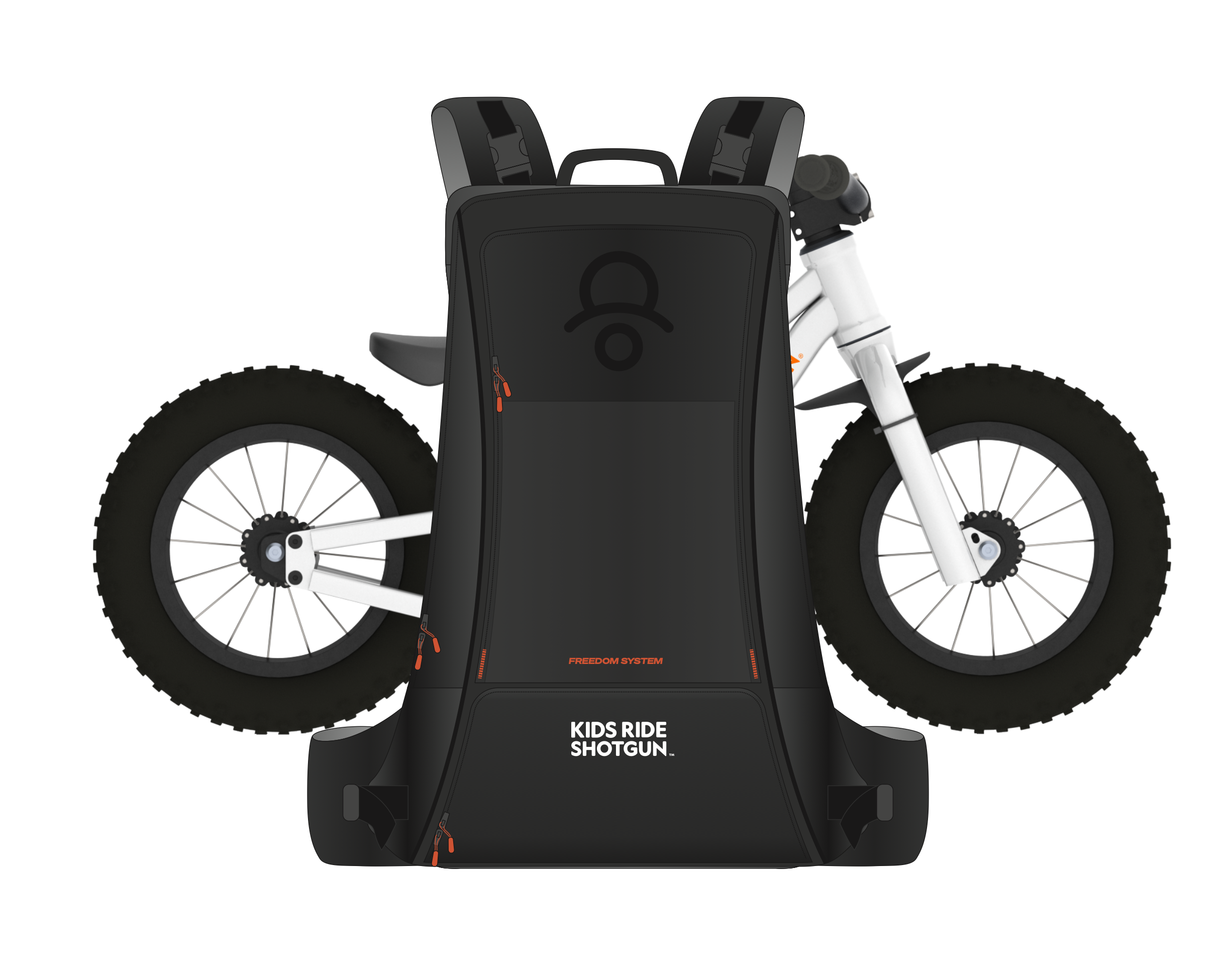
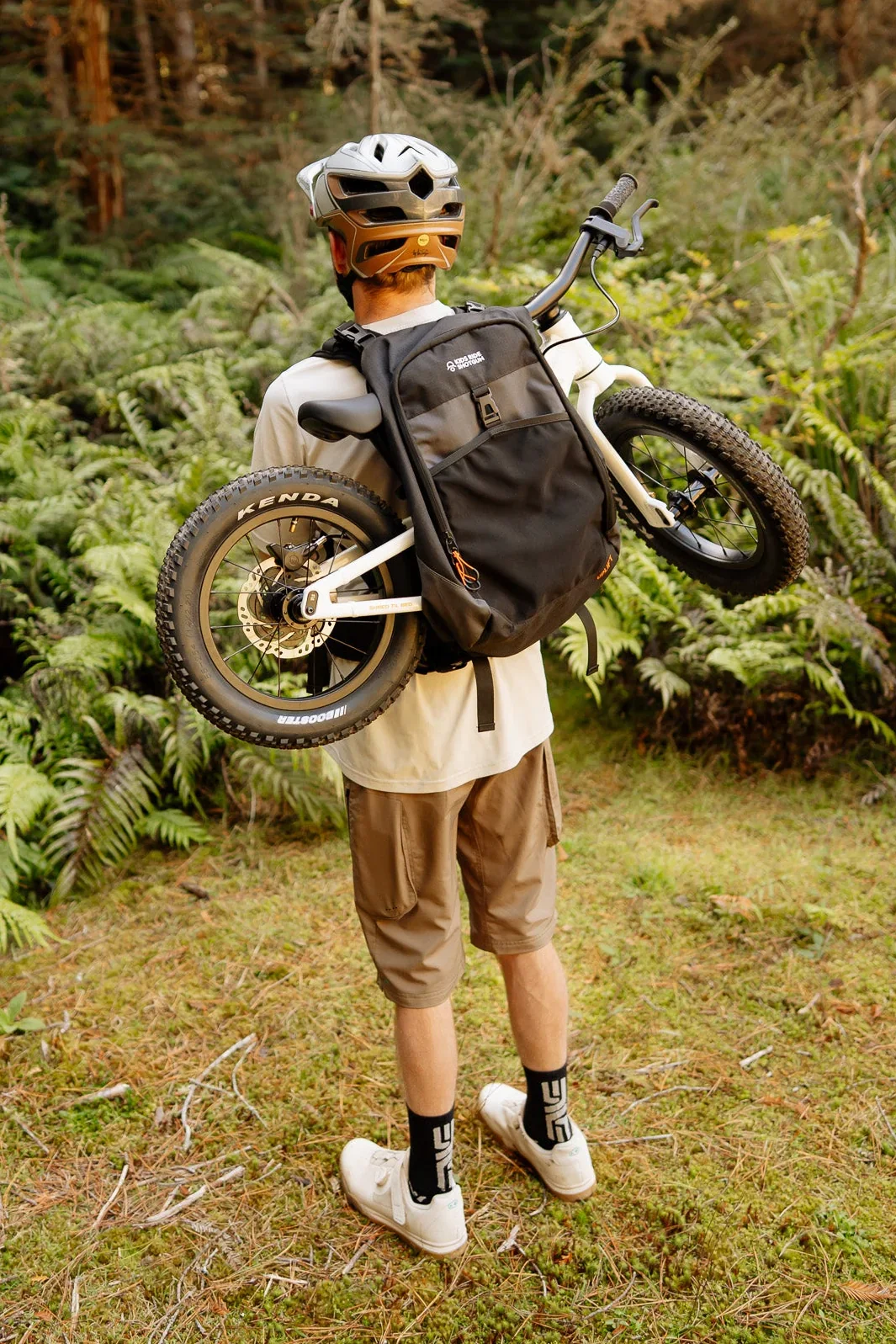
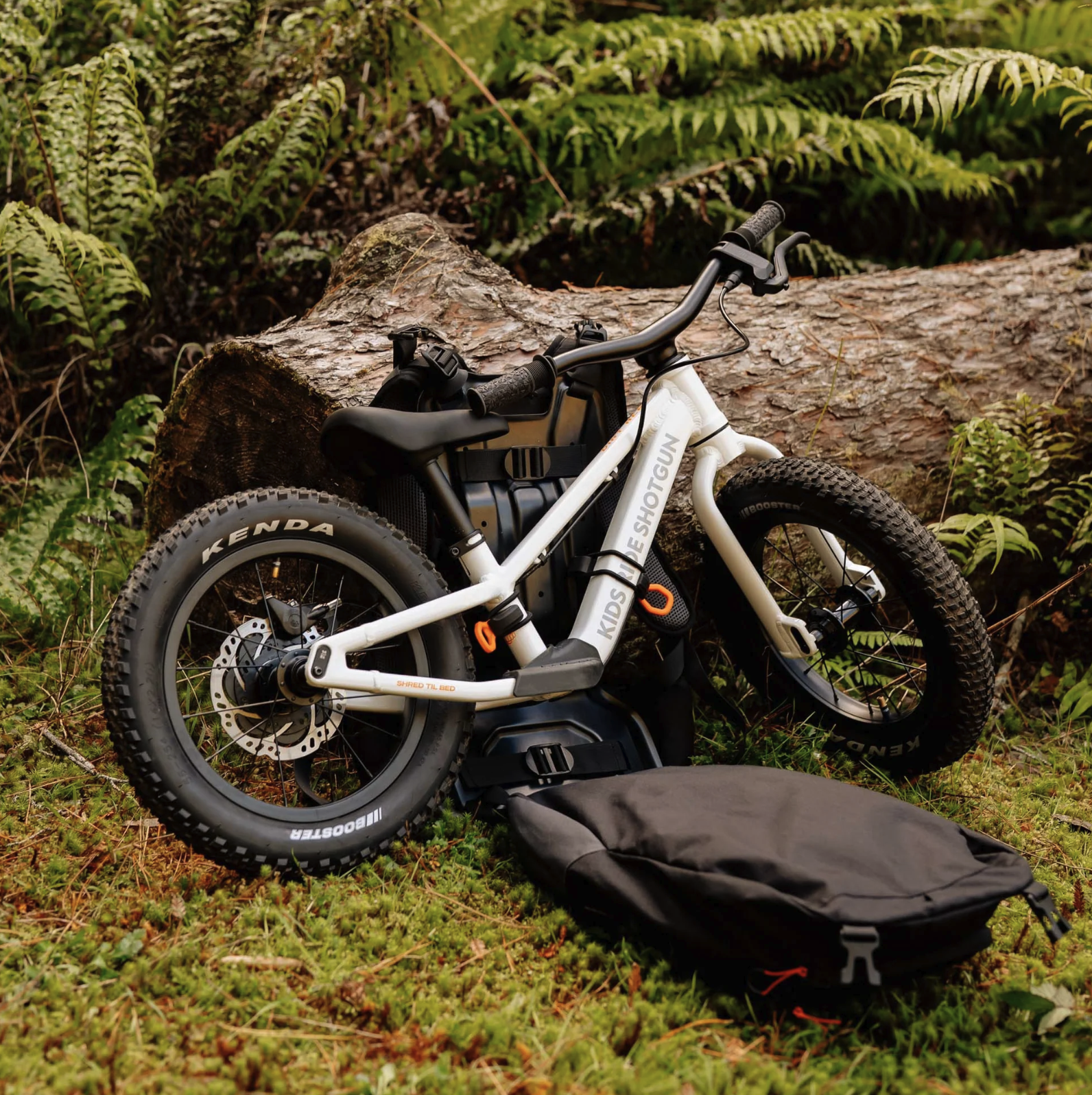
Designed a novel balance-bike carrying system with Kids Ride Shotgun; purpose-built to help families ride further into the forest.
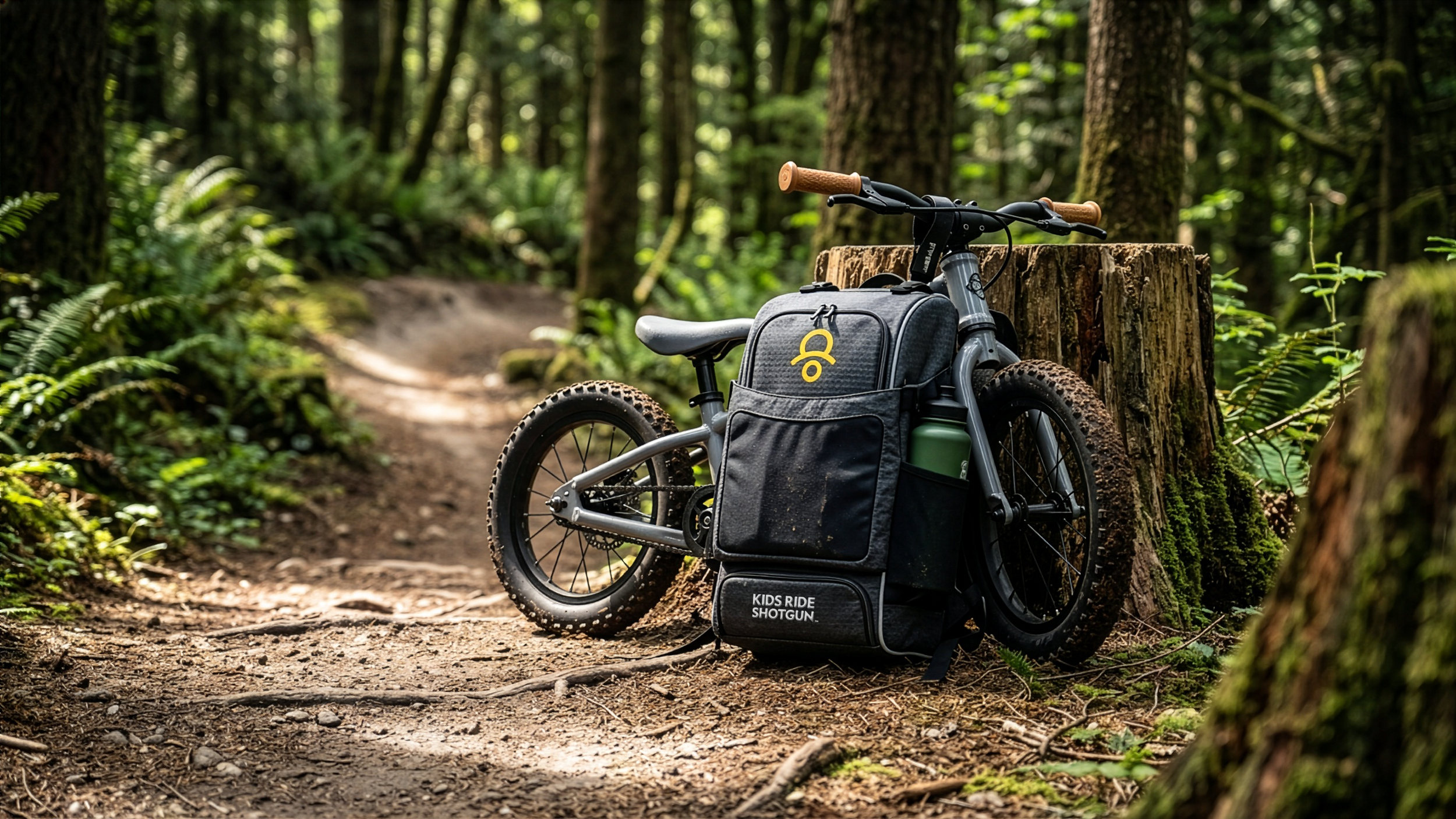
A simple observation: when young kids begin riding balance bikes, family mountain bike rides become constrained by distance, terrain, and child fatigue.
Project Information:
Client: Kids Ride Shotgun
Industry: Consumer Products, Soft Goods & Sporting Equipment
Services: New Product Development
New product definition
Designed new bag concepts
Design functioning prototypes
Developed form and product language
Design for Manufacturing (DFM).
-
Overview
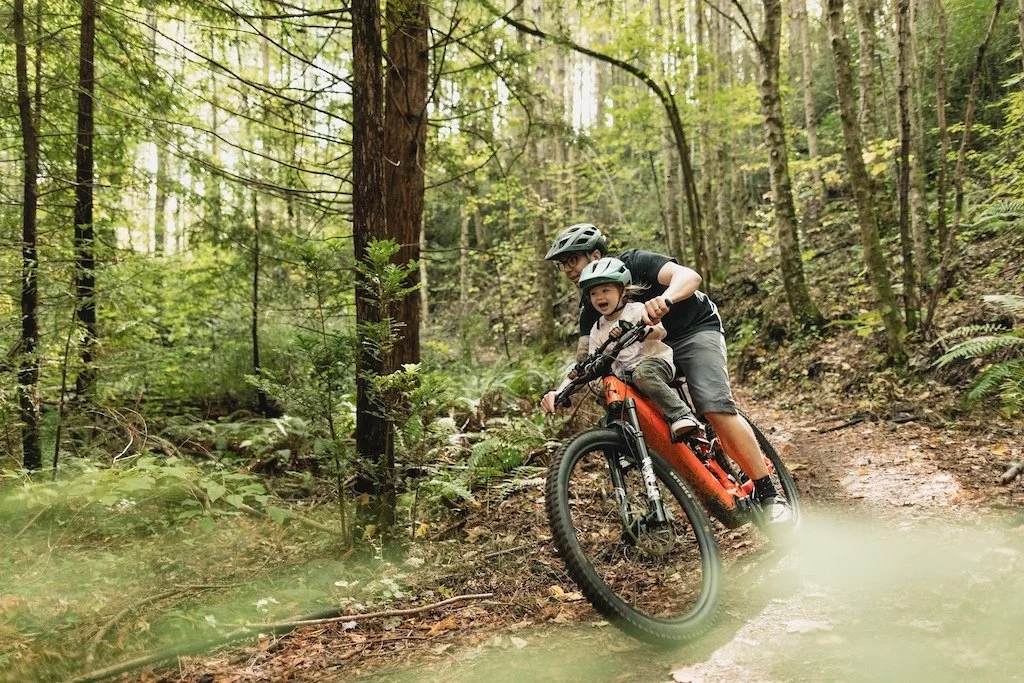
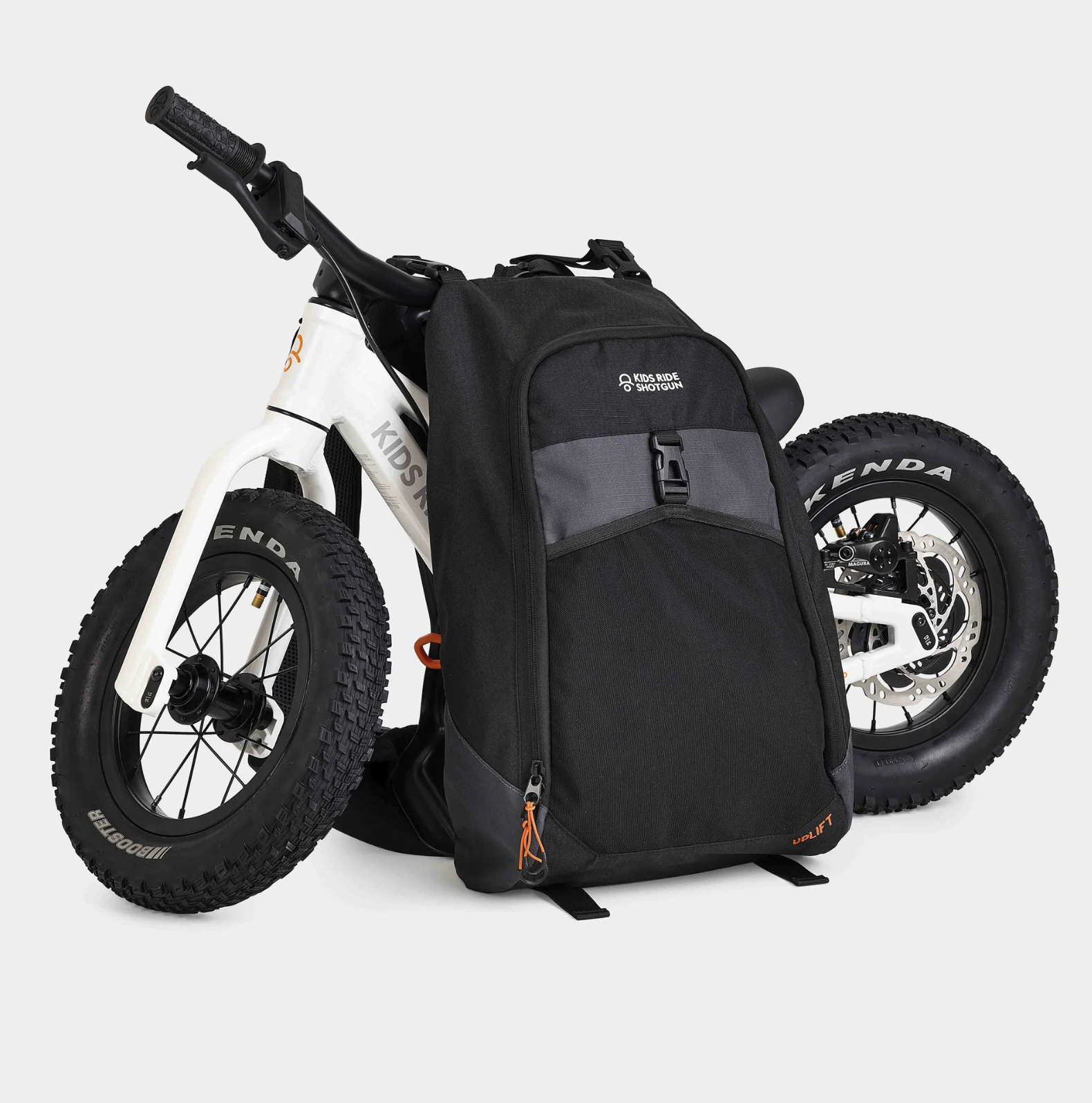
A simple observation: when young kids begin riding balance bikes, family mountain bike rides become constrained by distance, terrain, and child fatigue.The project goal was to create a purpose-built backpack for carrying a balance bike - a product that could integrate seamlessly into the mountain biking experience while reflecting the technical performance, visual language, and culture of the Kids Ride Shotgun brand. The ambition was to create a category-defining object: part technical equipment, part mobility system, and part enabler of a new riding behaviour.
"The ultimate carry pack to shred with your kid"
Frame
Children love riding the descents and flowing sections of trail, but let’s be honest – the climbs, transitions, and long approaches can quickly become barriers for toddlers. Parents are often left carrying a child, a balance bike, and additional riding gear simultaneously - an experience that interrupts the ride and limits how far families can explore together.This opportunity was not simply to design another backpack, but to rethink how young families move through trail environments.
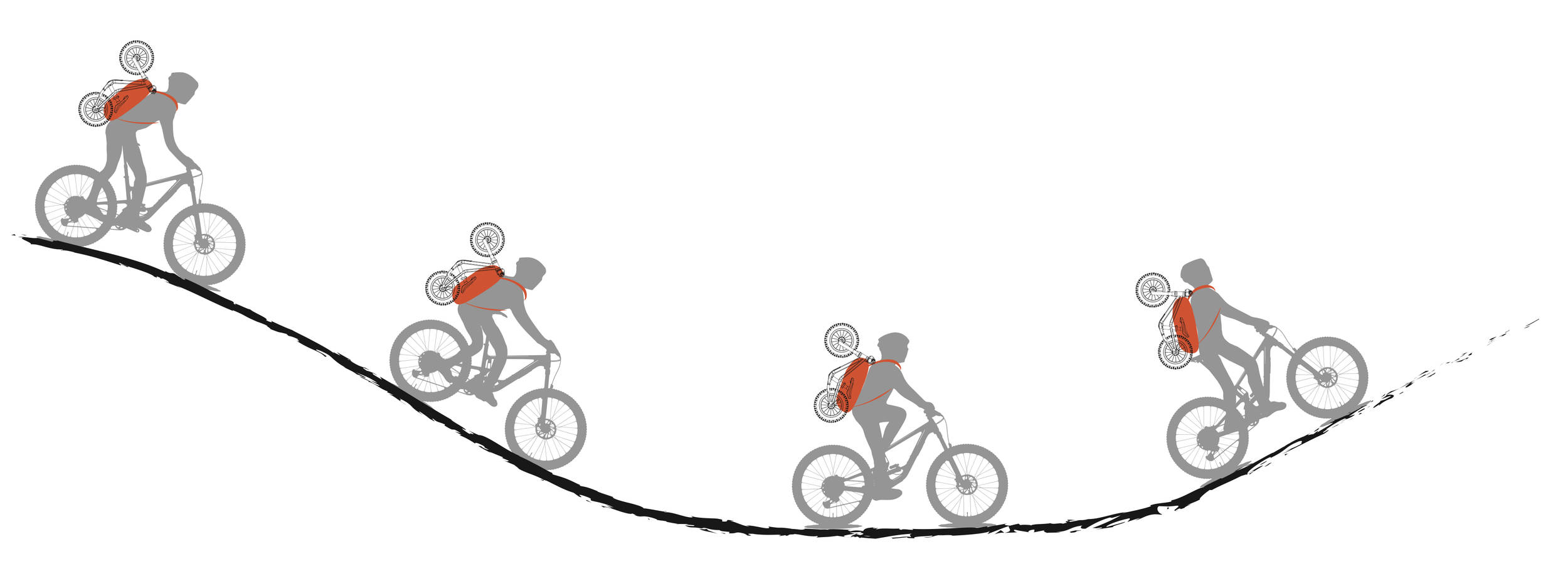
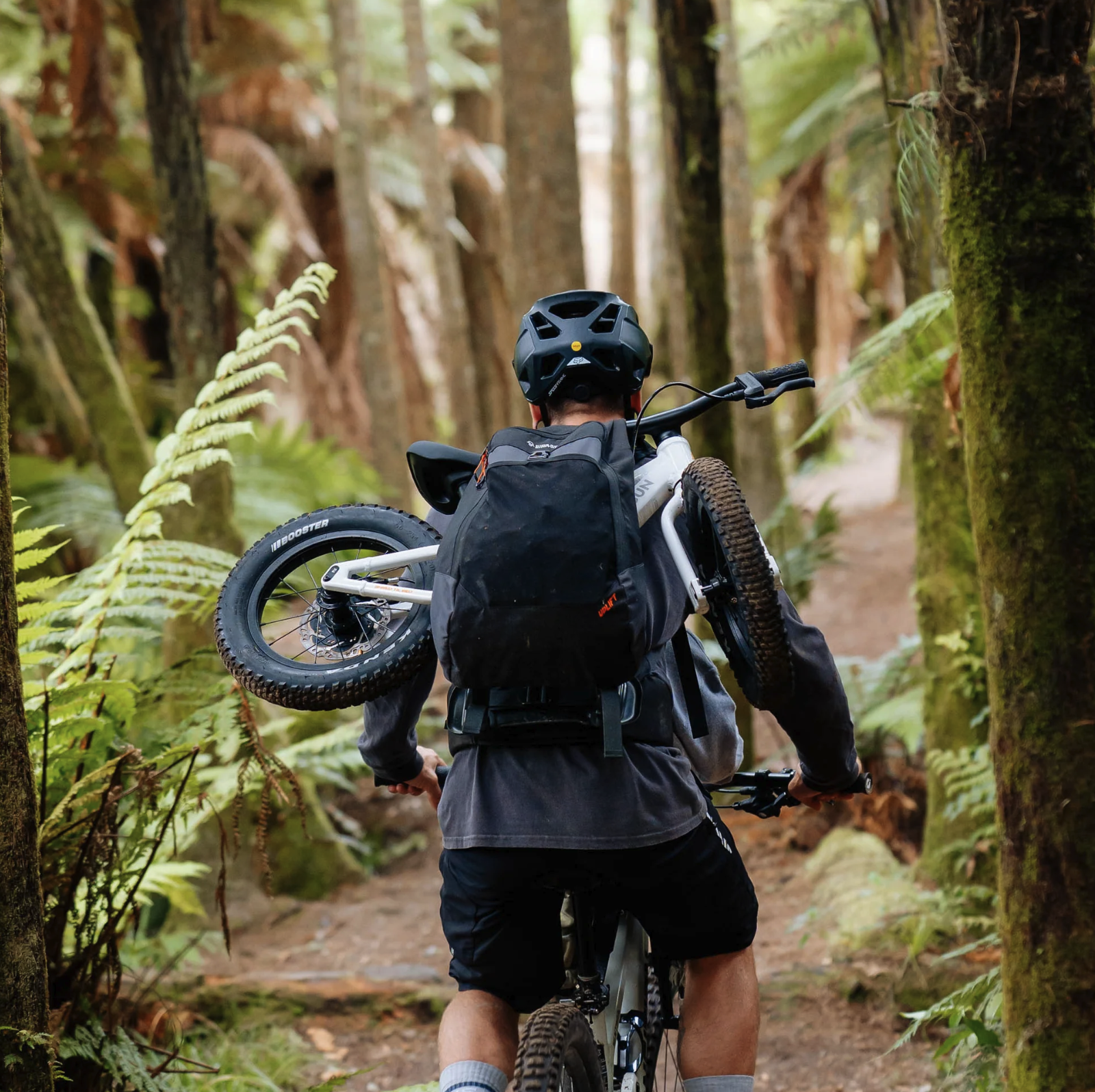
Unlike conventional backpacks, the product needed to support highly dynamic use cases. Parents would move between pedalling technical terrain, carrying awkward loads, assisting children, and repeatedly loading and unloading bikes throughout a ride. Existing hiking and cycling packs were not designed for this type of interaction. The solution needed to feel instinctive, fast, stable, and durable under real trail conditions. The design challenge centred around a unique behavioural moment within family mountain biking: the constant transition between riding and carrying.
Our Approach
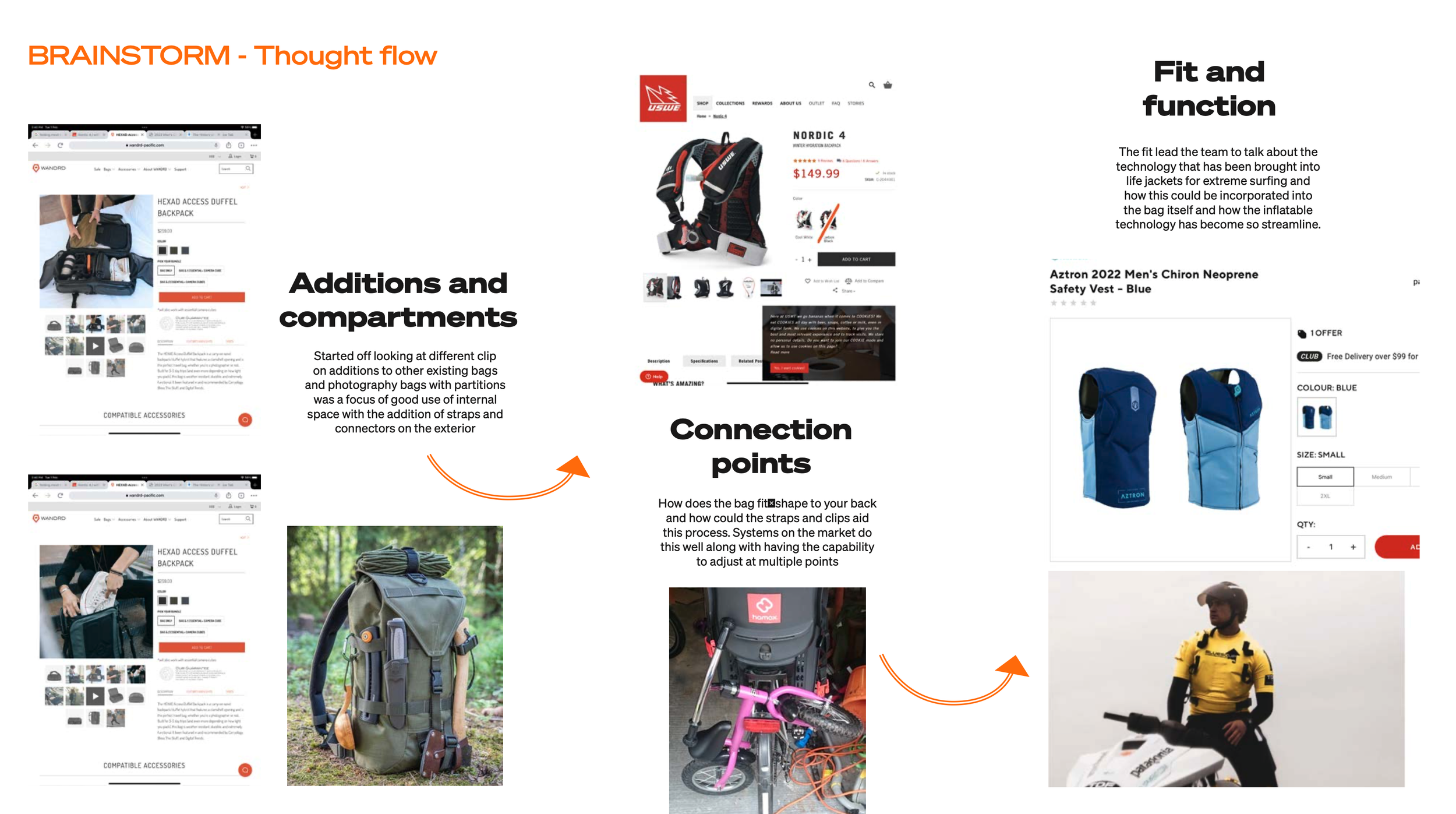
We began by defining the core functional requirements and feature set that would shape both the form and performance of the carrier system, alongside a series of guiding design principles:
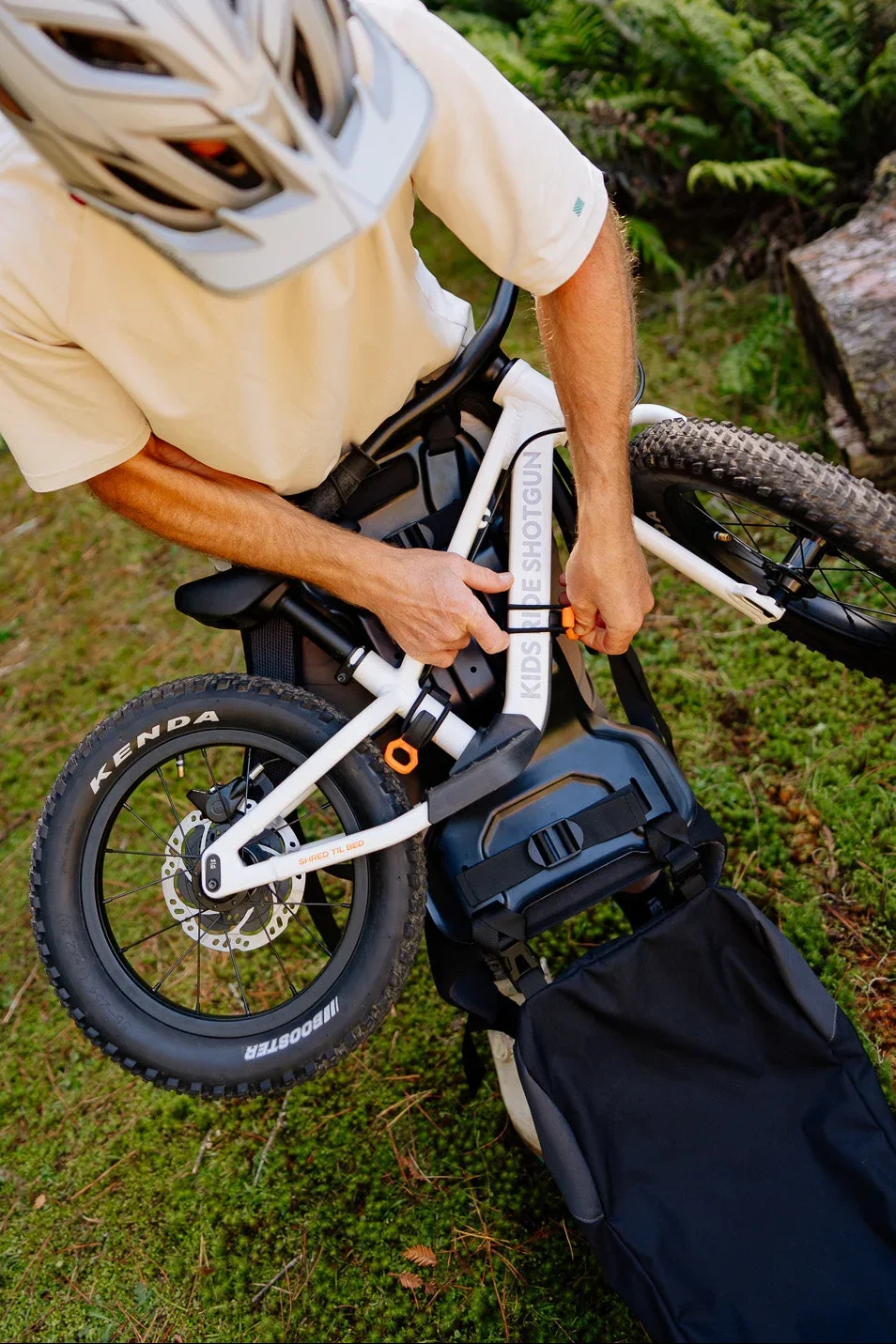
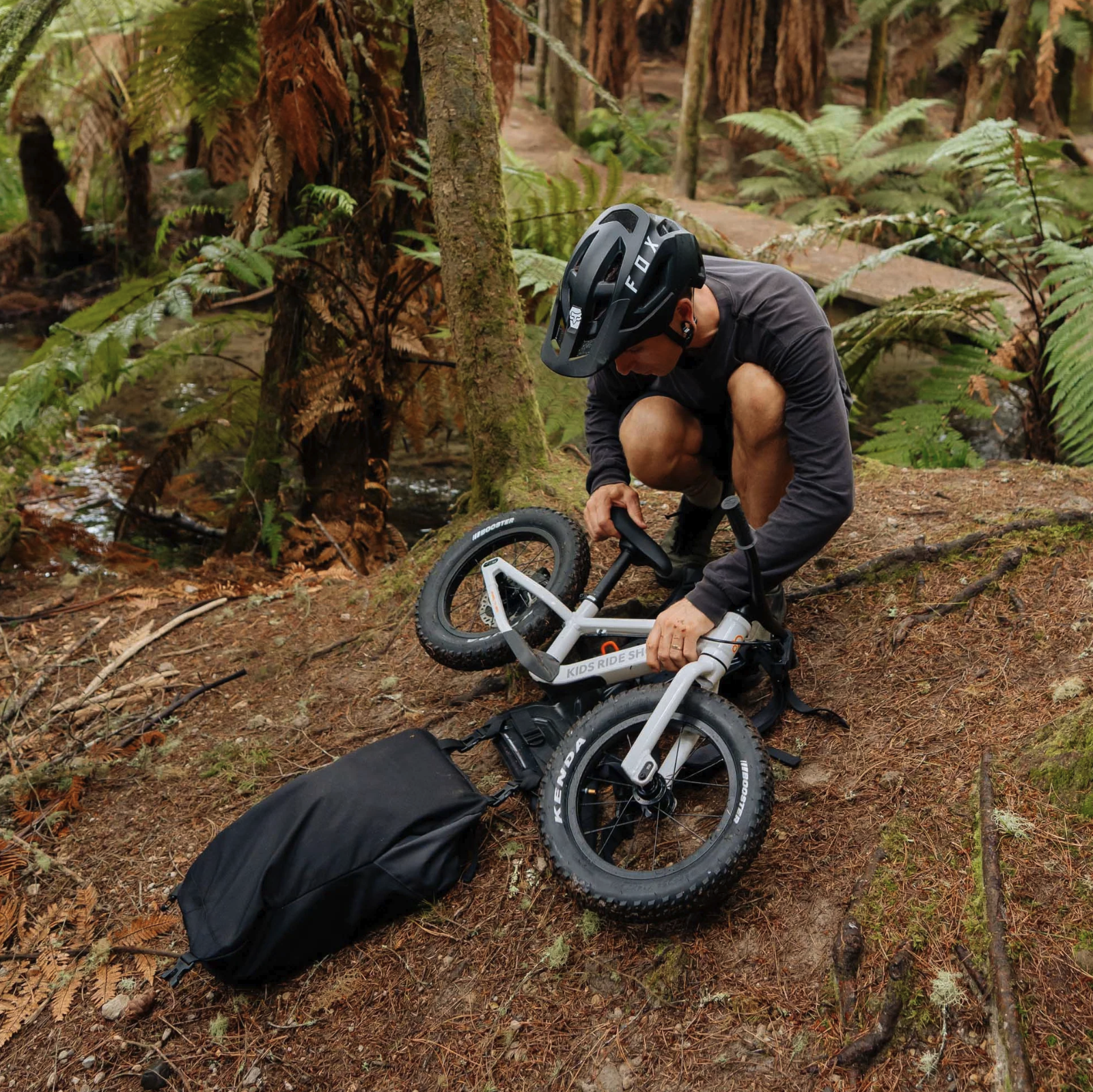
Fast transitions between ride and carry modes
Minimal friction between parent and child riding experiences
Simple, intuitive loading compatible with any balance bike
Integrated load support for stable riding comfort
From this foundation, four key concept territories were identified for exploration:
Bike-mounted systems — using existing connection points on the bike to create a support or cradling structure
Pack extension systems — modular add-on solutions that could attach to existing backpacks
Rider-mounted carriers — systems worn directly on the rider independent of a conventional pack
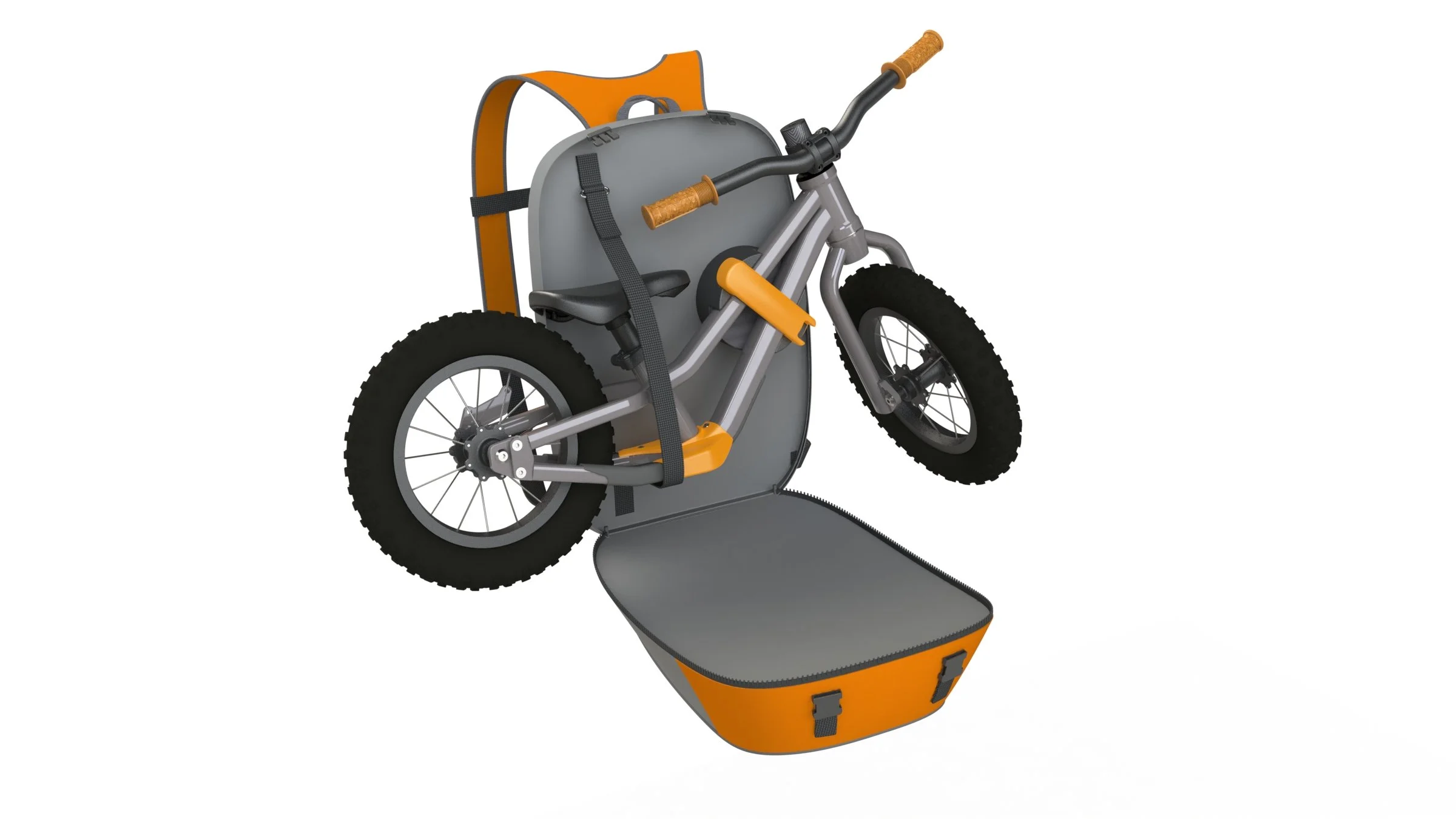
Integrated backpack systems — an all-in-one technical backpack purpose-built for family mountain biking missions
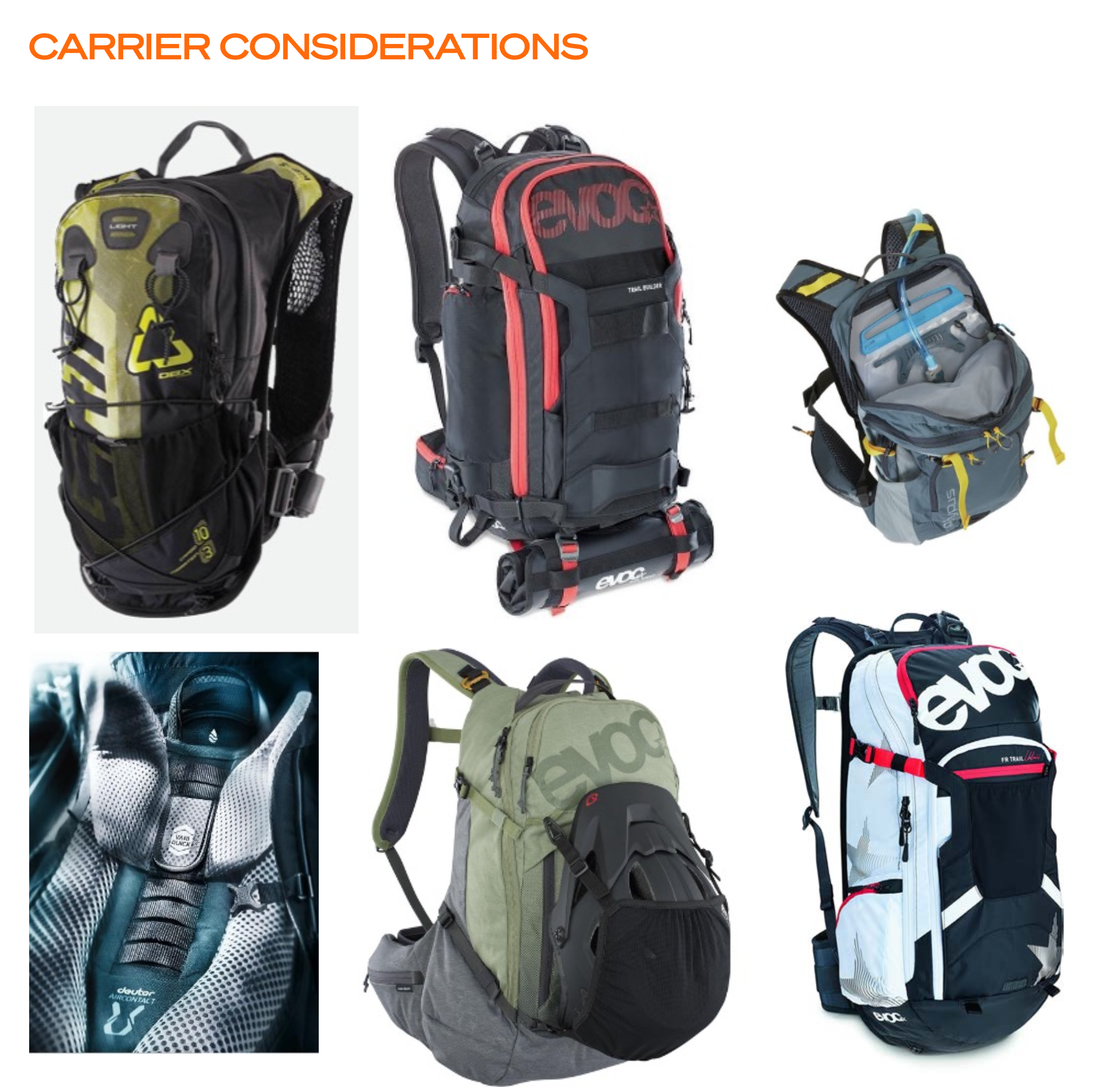
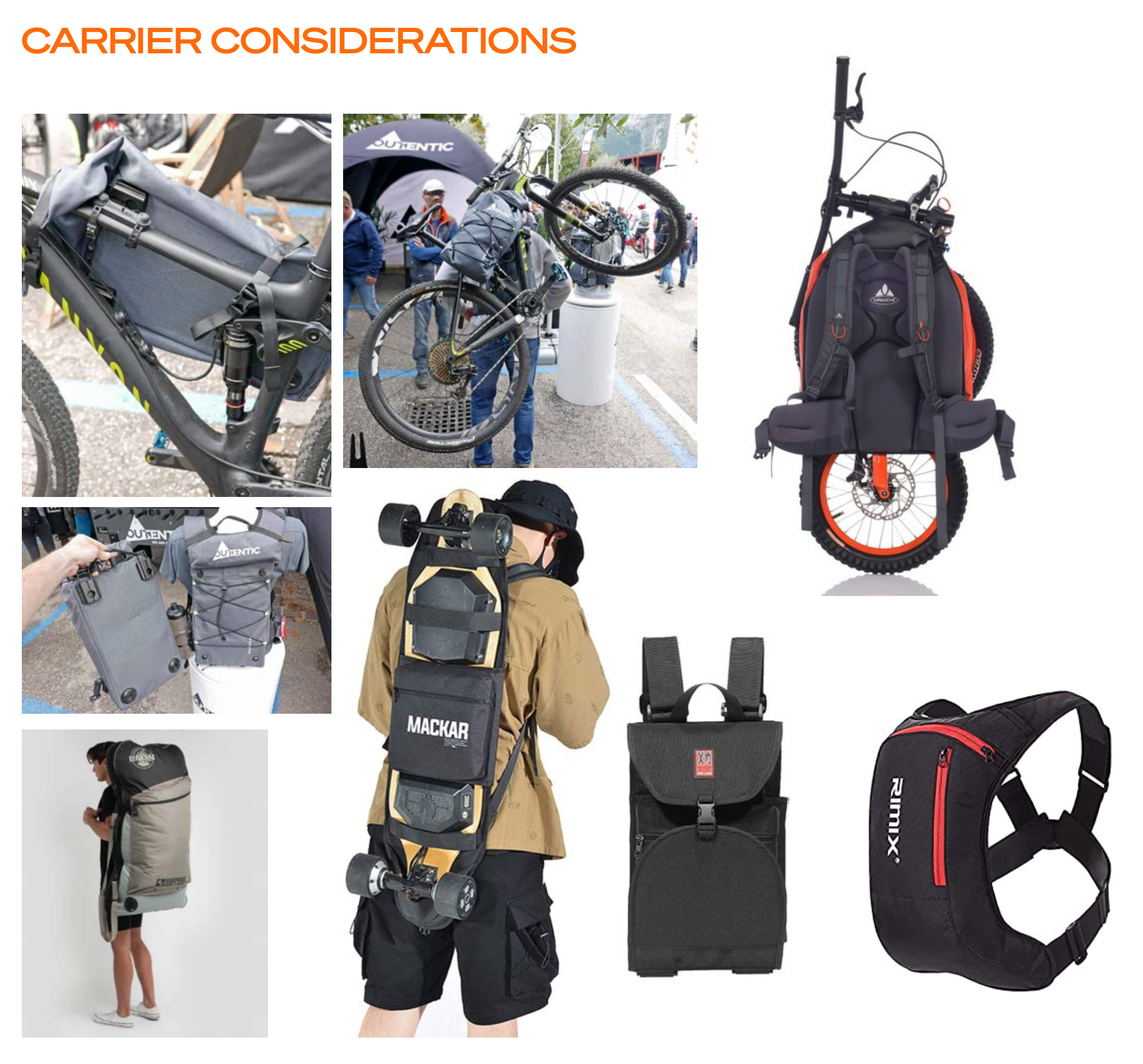
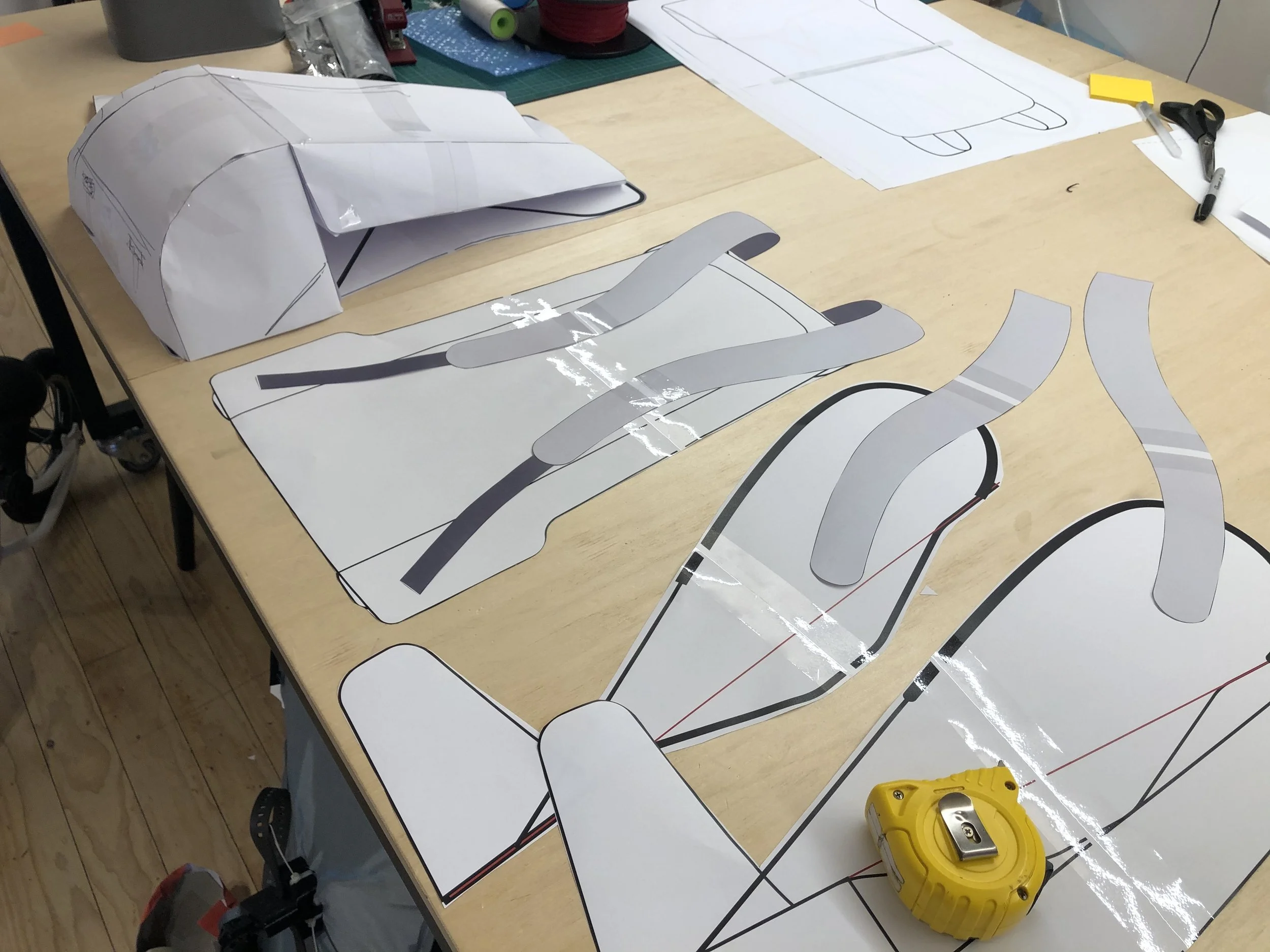
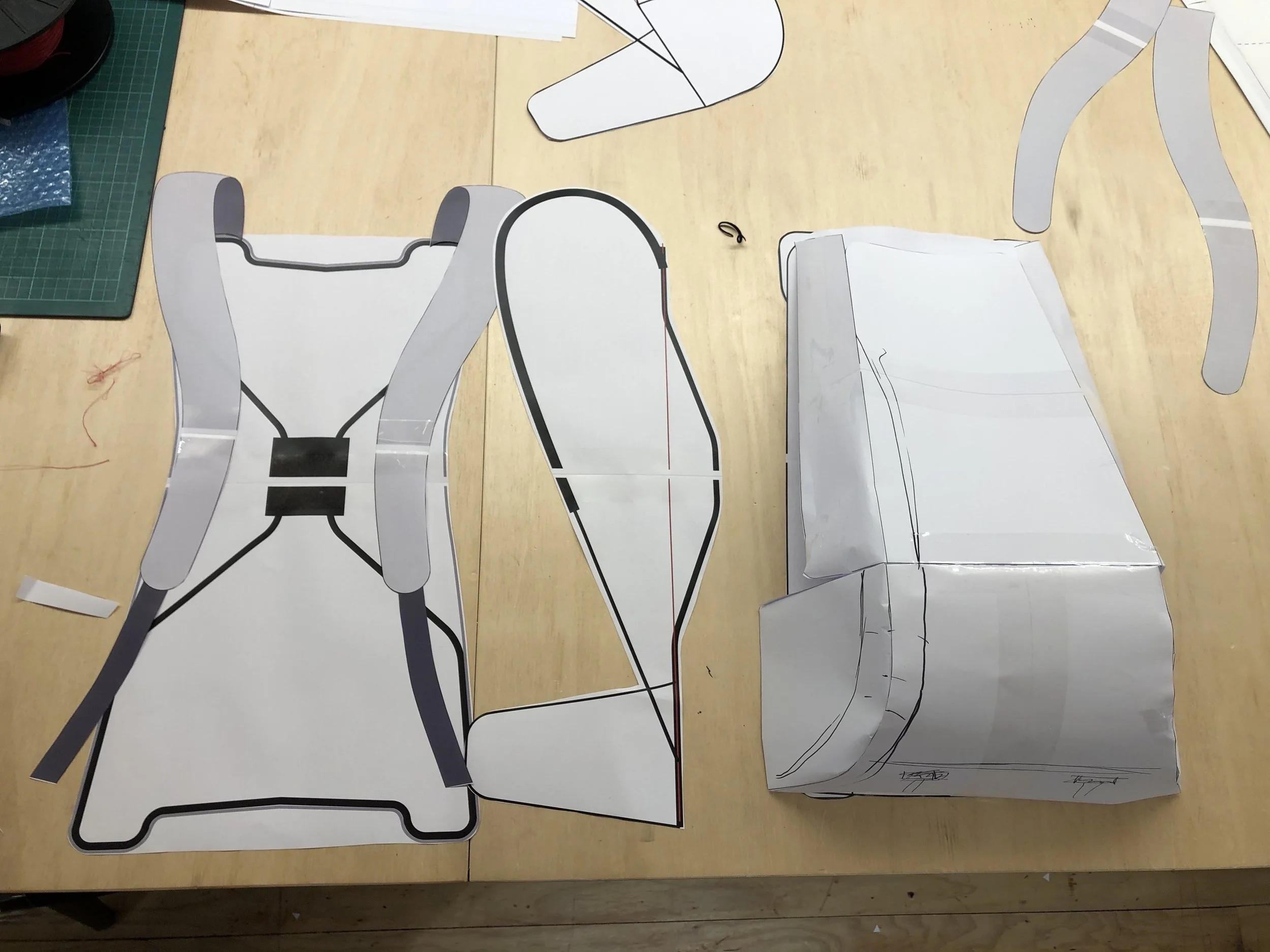
Fifteen distinct concepts were developed through rapid industrial design exploration, supported by fast-turnaround CAD studies, virtual modelling, and low-fidelity physical prototypes. Through evaluation and rider feedback, two key directions were selected for further development.
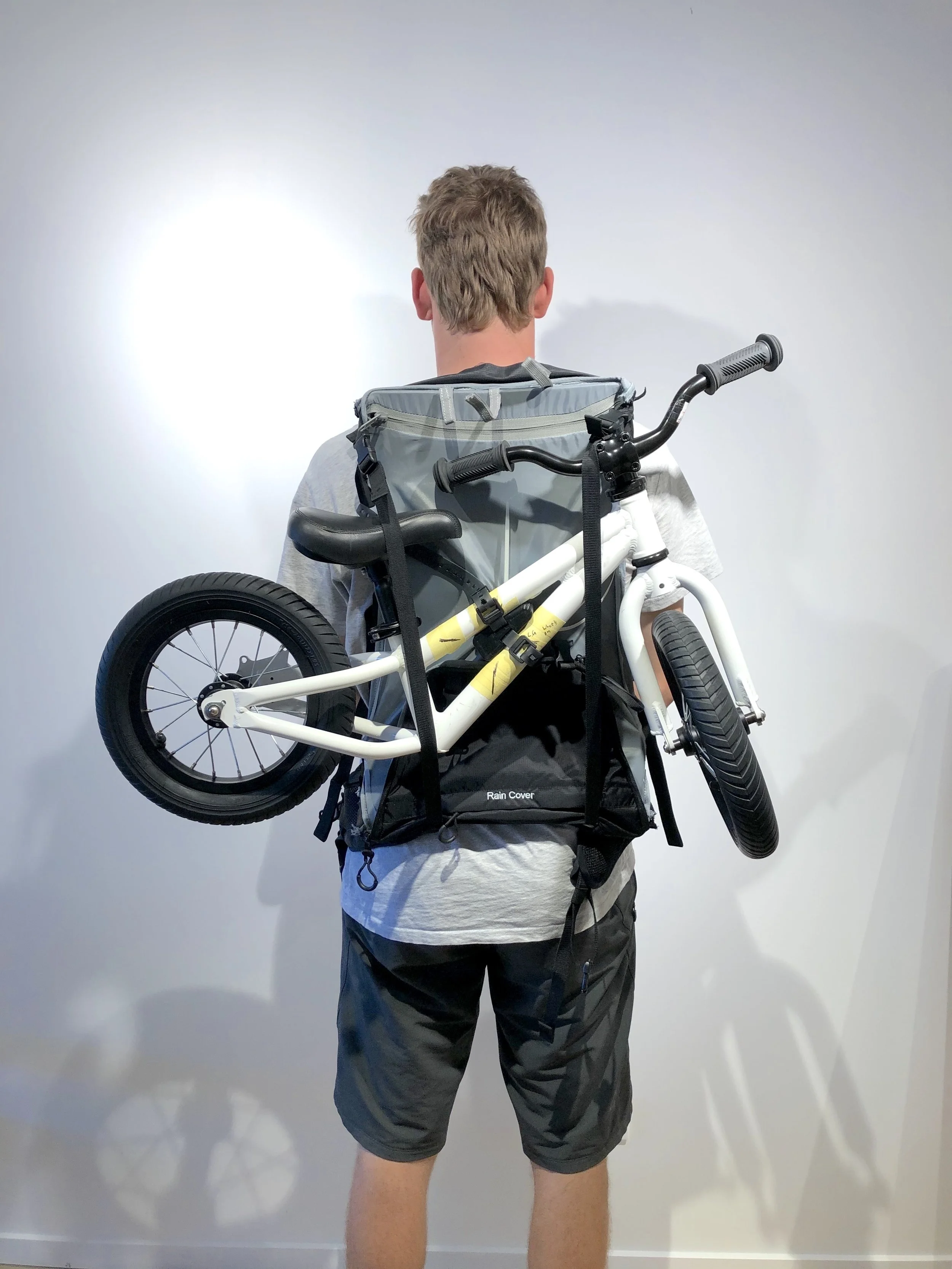
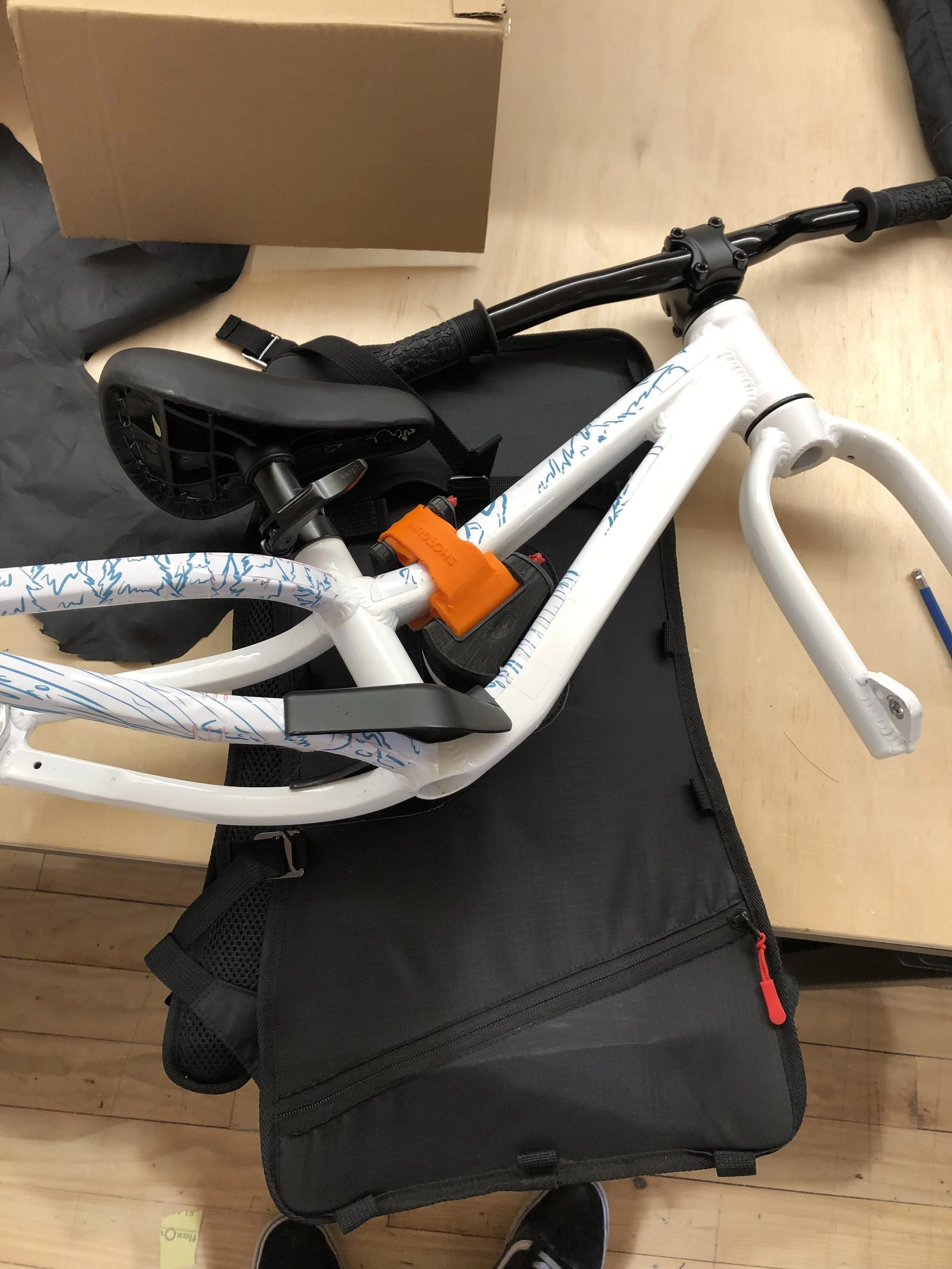
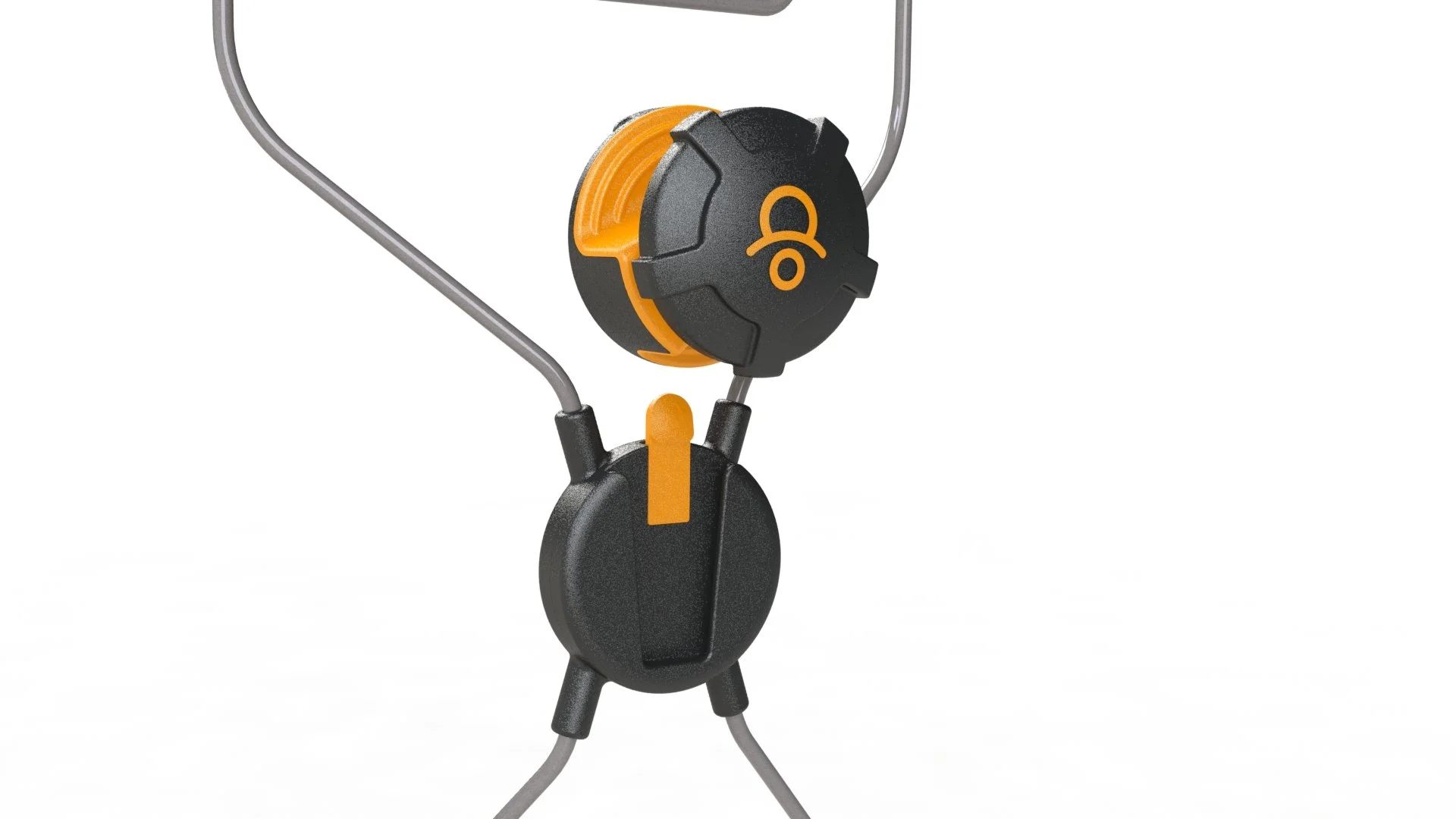
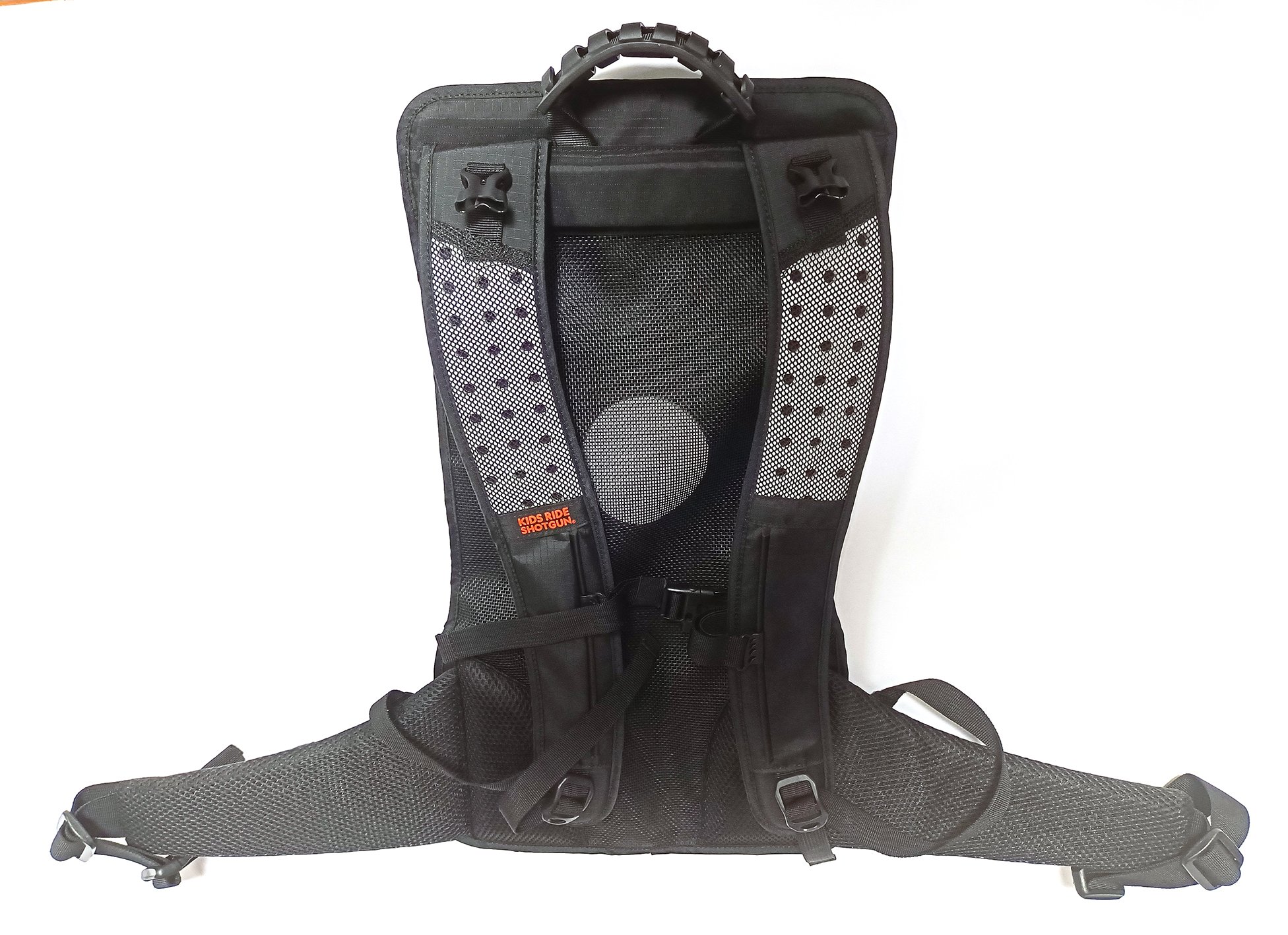
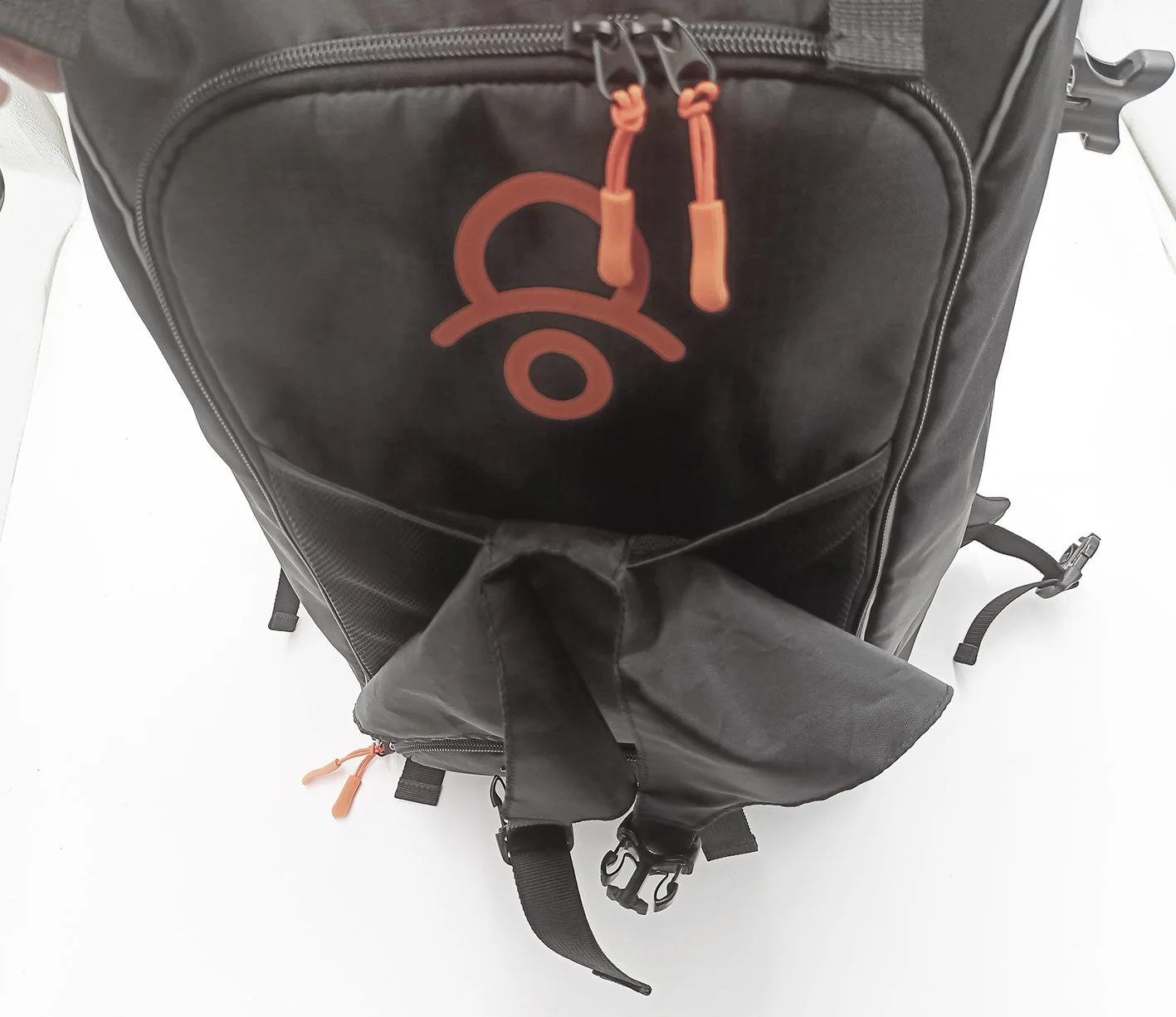
Industrial design focused on developing a custom load-carrying architecture that positioned the bike close to the rider’s centre of gravity, reducing sway and improving stability while pedalling technical terrain. The bike mounting and retention system was engineered to accommodate a wide variety of balance bike geometries and wheel sizes without requiring adjustment-heavy setups. Multiple attachment strategies were explored, including rapid-lock interfaces, proprietary moulded components, and novel clip mechanisms.
In parallel, the soft goods engineering process developed a versatile detachable 20L cargo module that allowed the system to shift between lightweight shuttle use and longer trail missions. Hydration compatibility, technical materials, and trail-ready durability positioned the product firmly within the MTB category. Common riding scenarios and cargo requirements were mapped extensively, with rapid rider feedback loops informing the internal storage architecture, pocket layouts, and three-dimensional bag form.
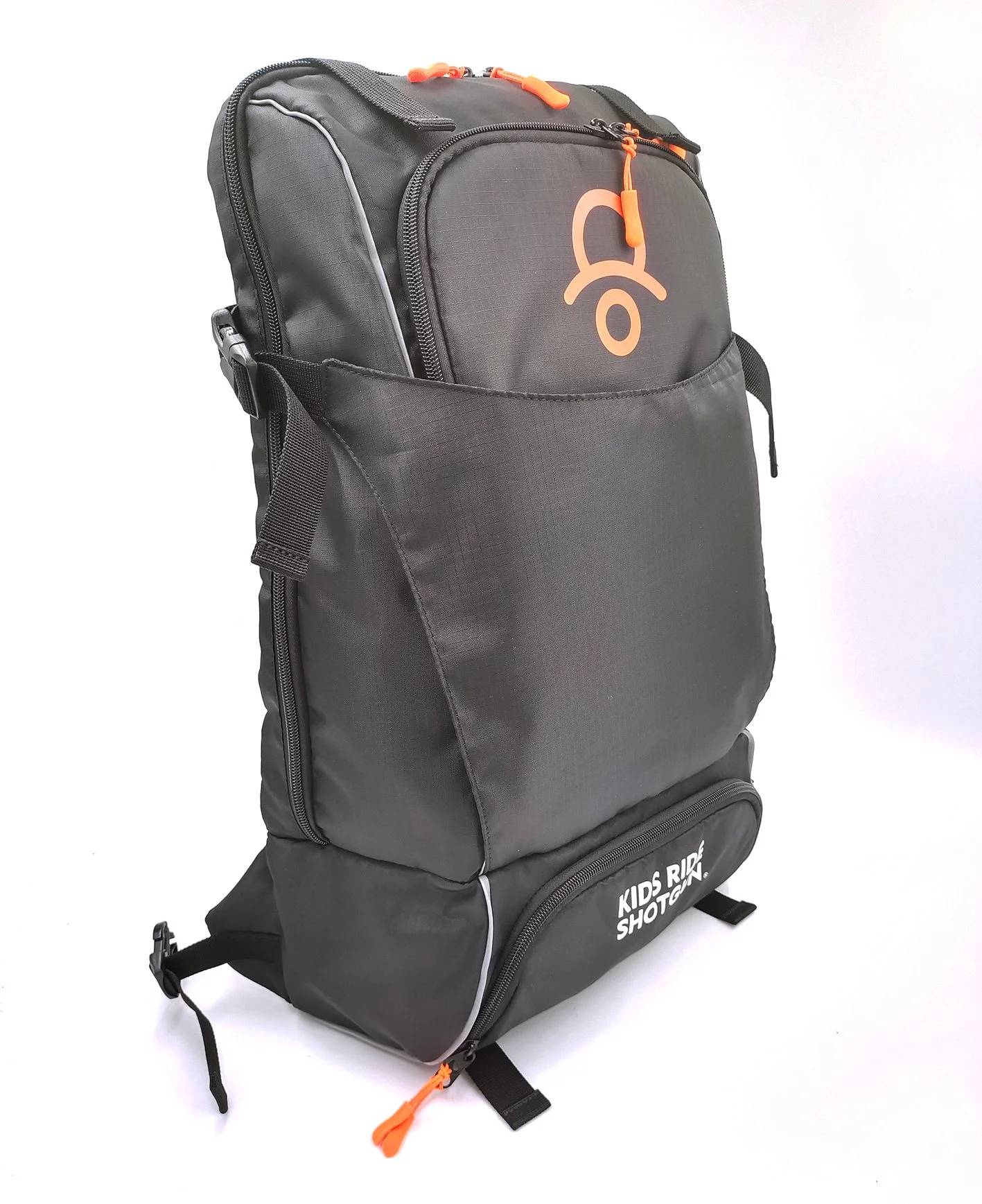
Visually, the product was designed to align closely with the existing Kids Ride Shotgun ecosystem. The final form is intentionally compact, rugged, and performance-oriented - drawing cues from technical riding equipment rather than traditional parenting products. The project deliberately positioned the backpack not as childcare equipment, but as riding equipment for people who ride with kids.
To support production transfer, detailed Design for Manufacture (DFM) documentation and technical packs were developed in collaboration with manufacturing partners. Material specifications, bill of materials (BOMs), and product verification and validation processes were established to define a robust production-ready build standard for the Kids Ride Shotgun team to scale internally.
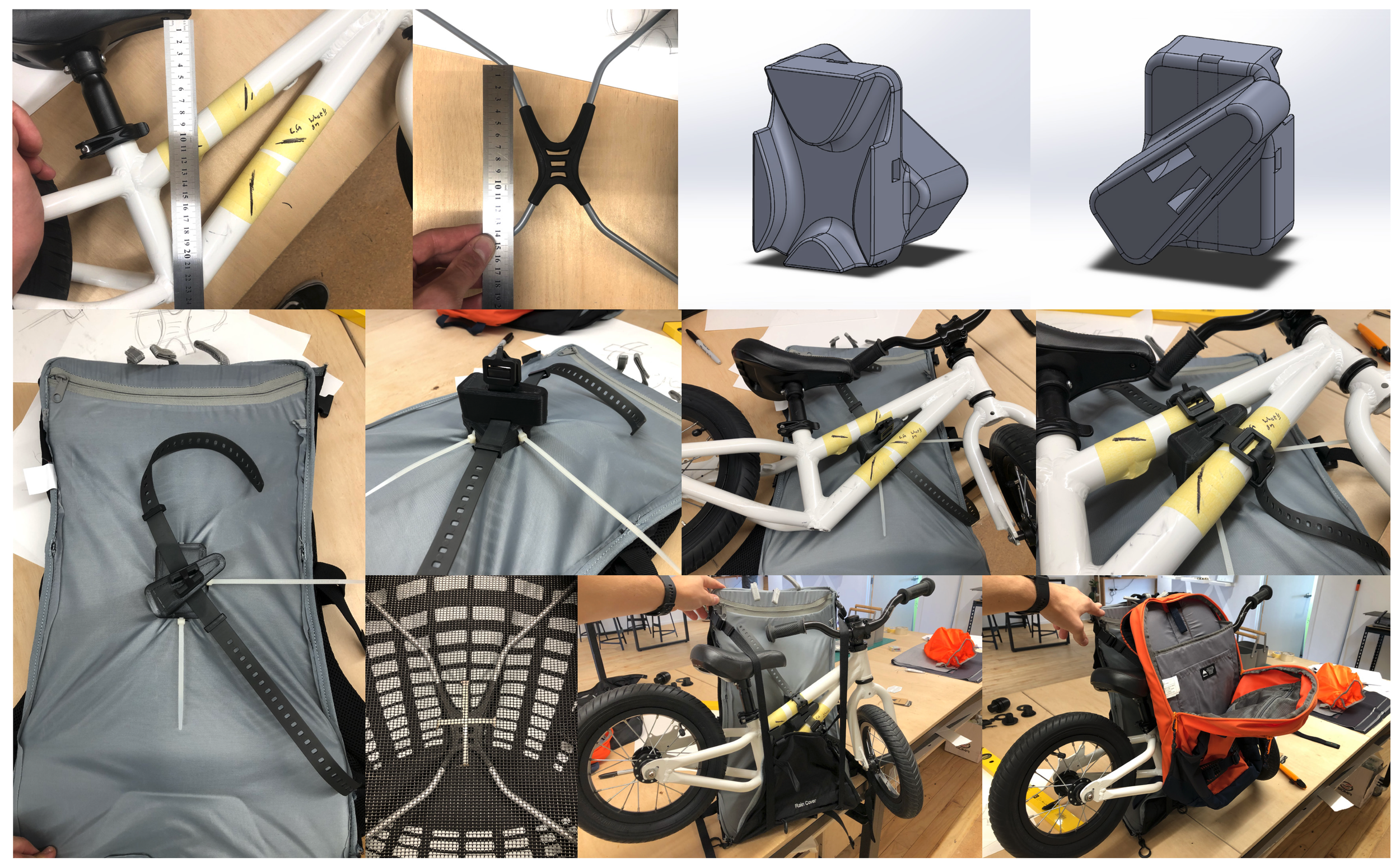
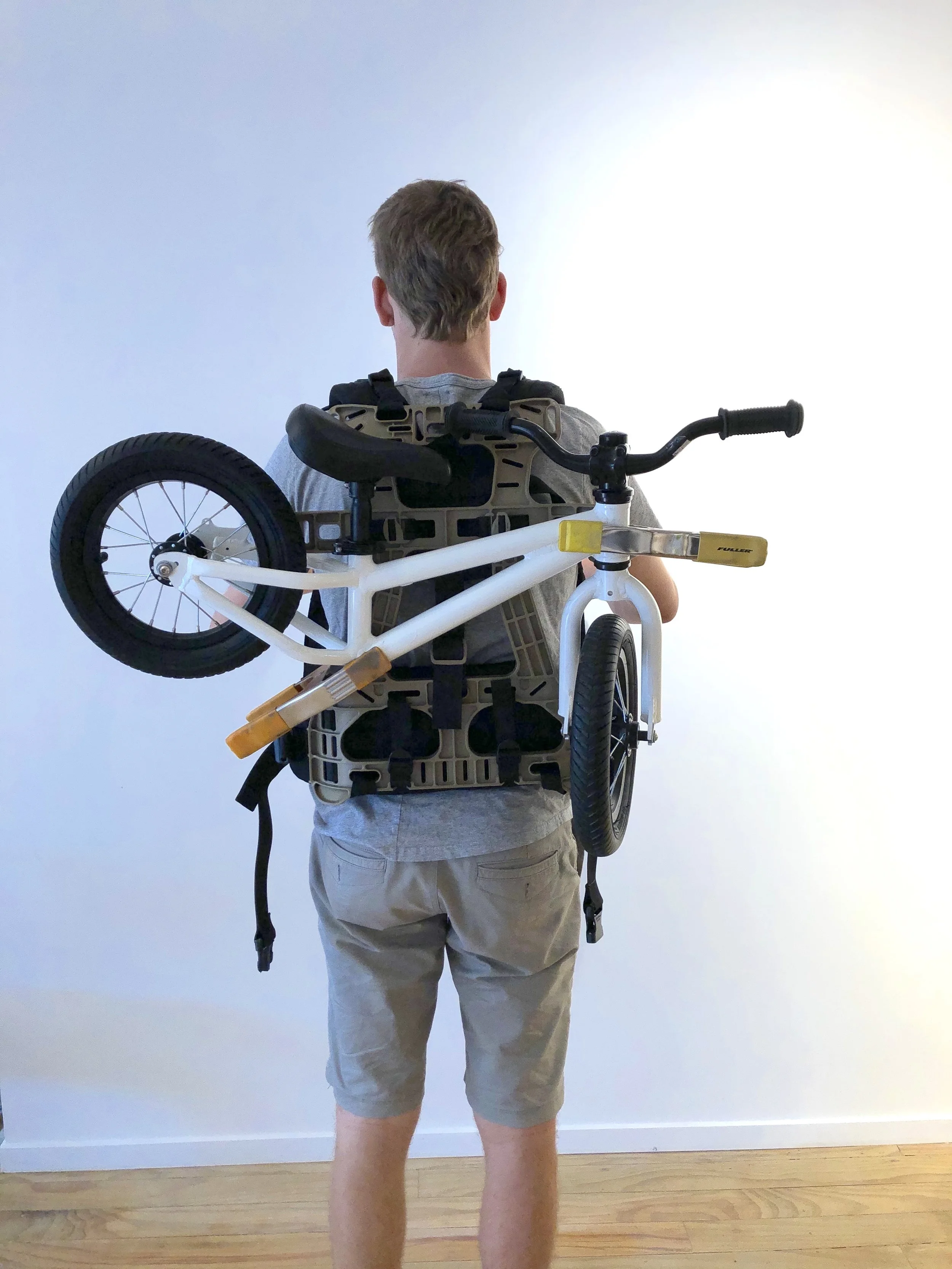
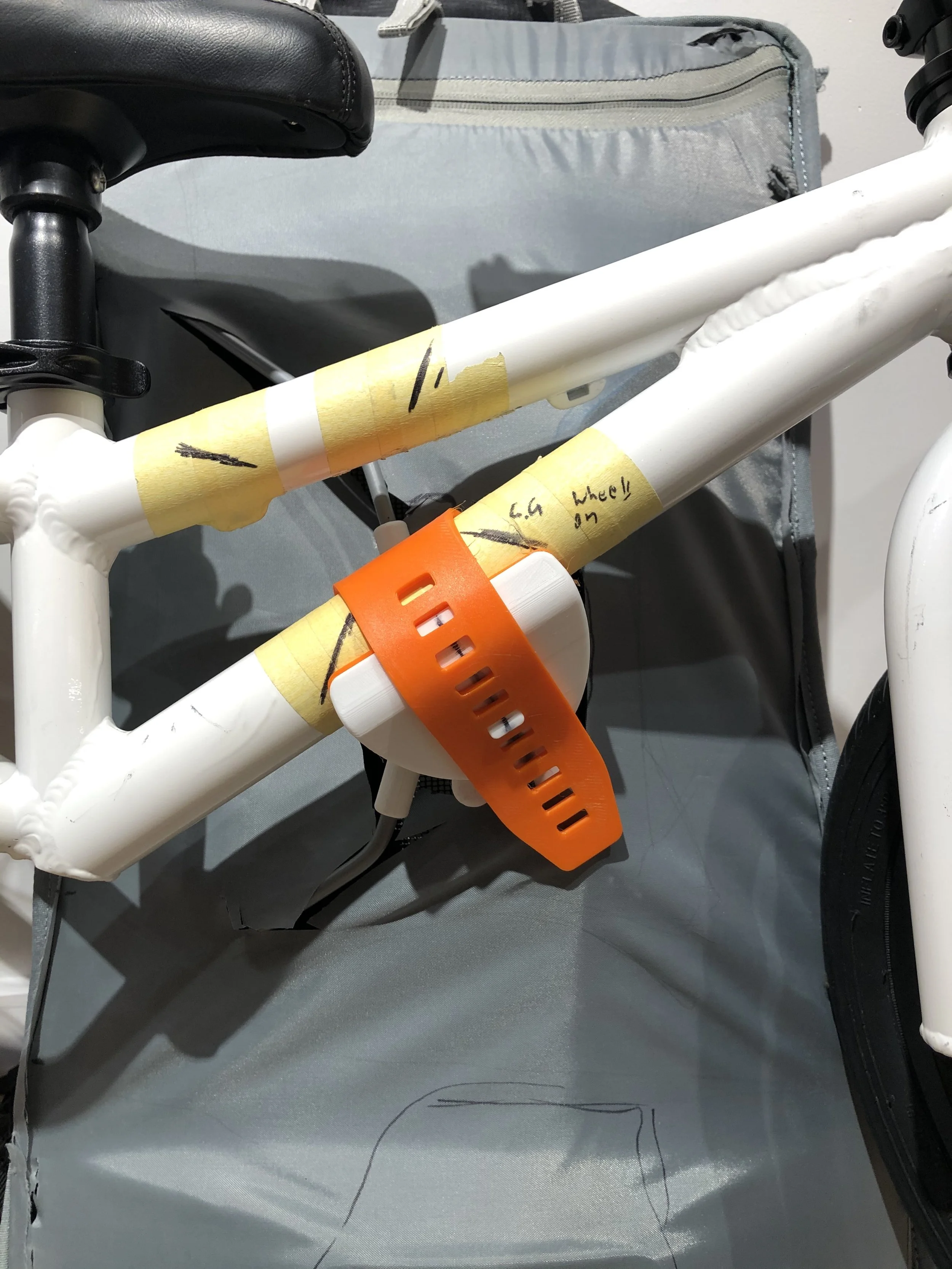
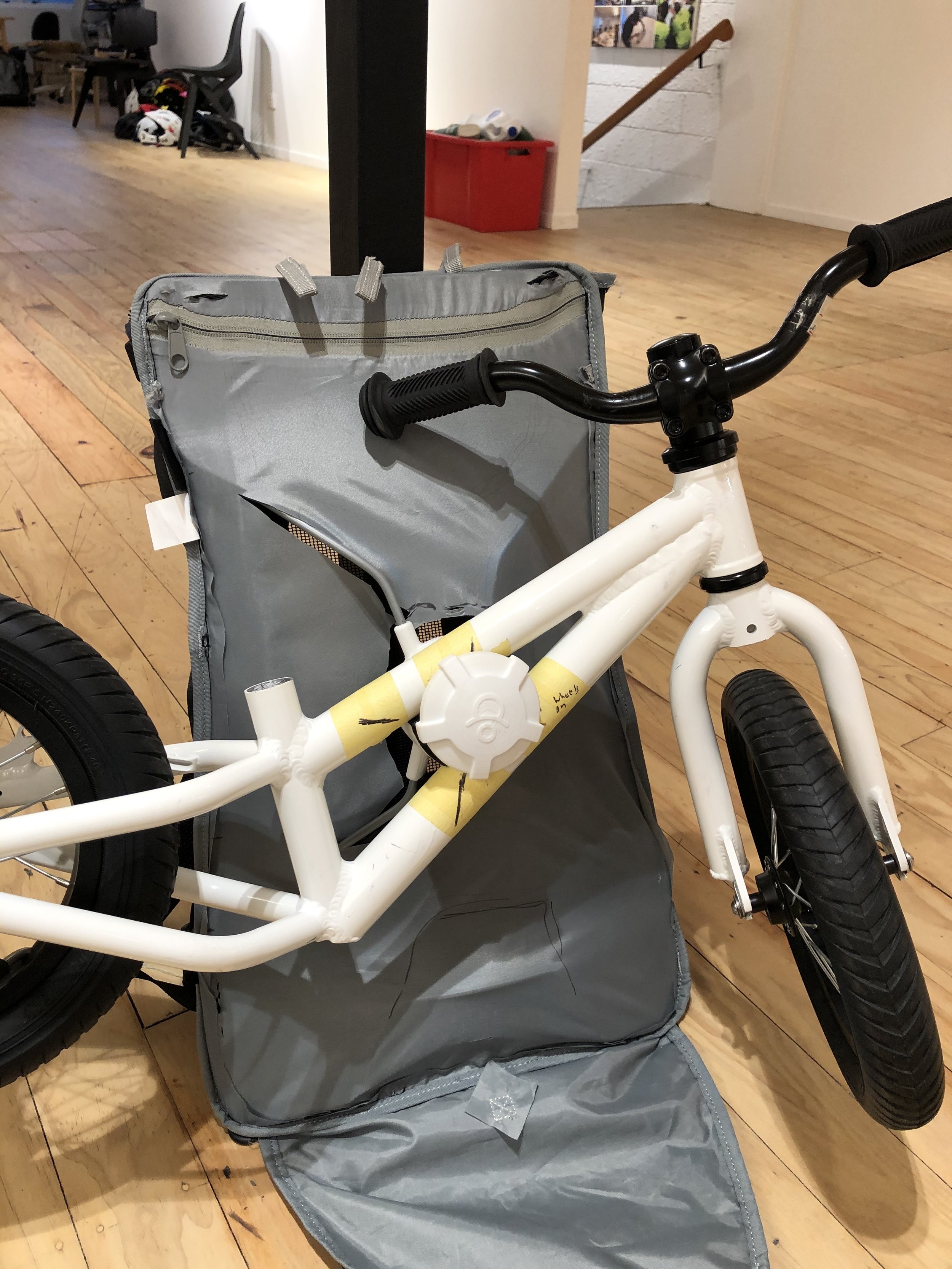
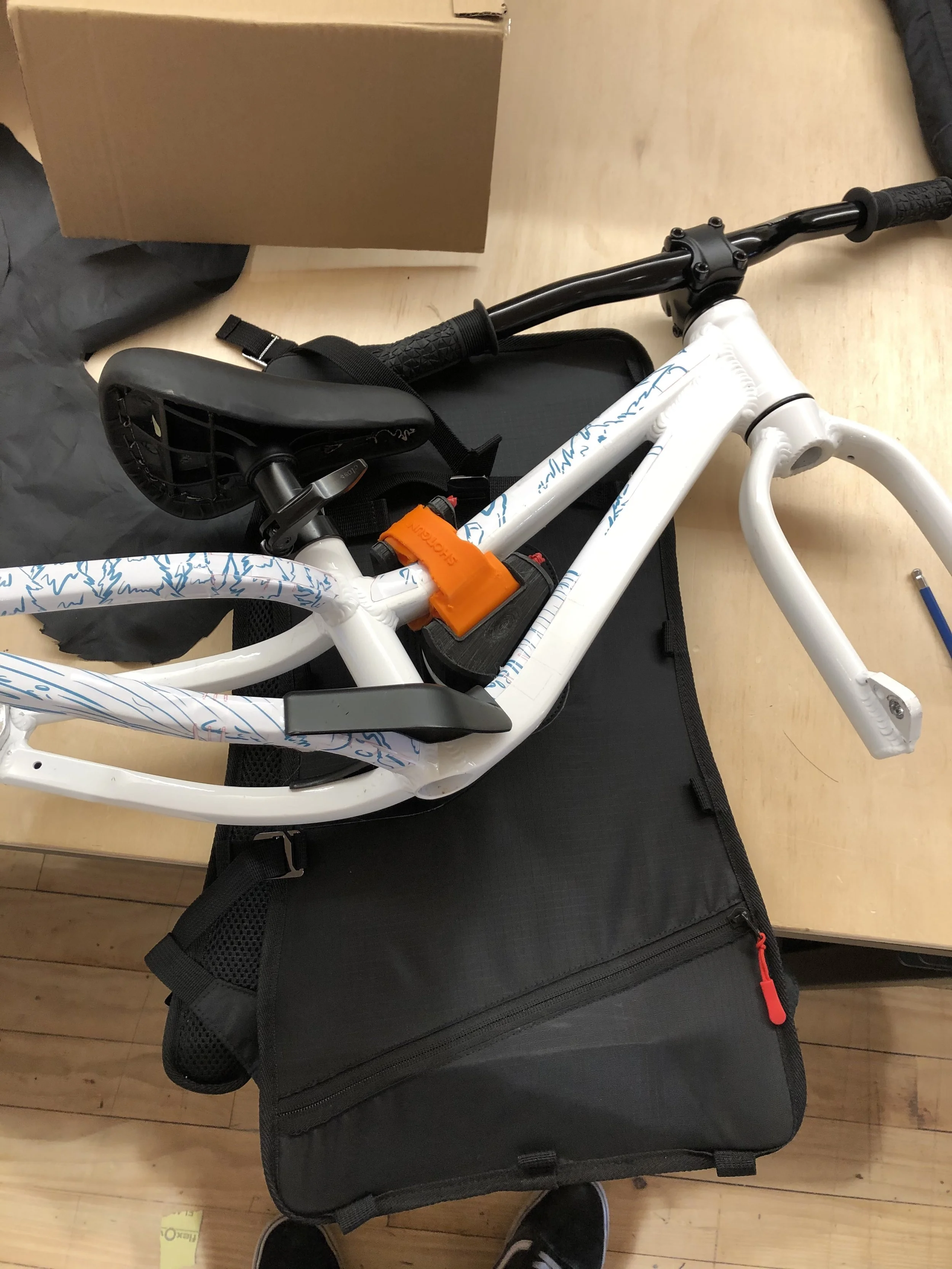
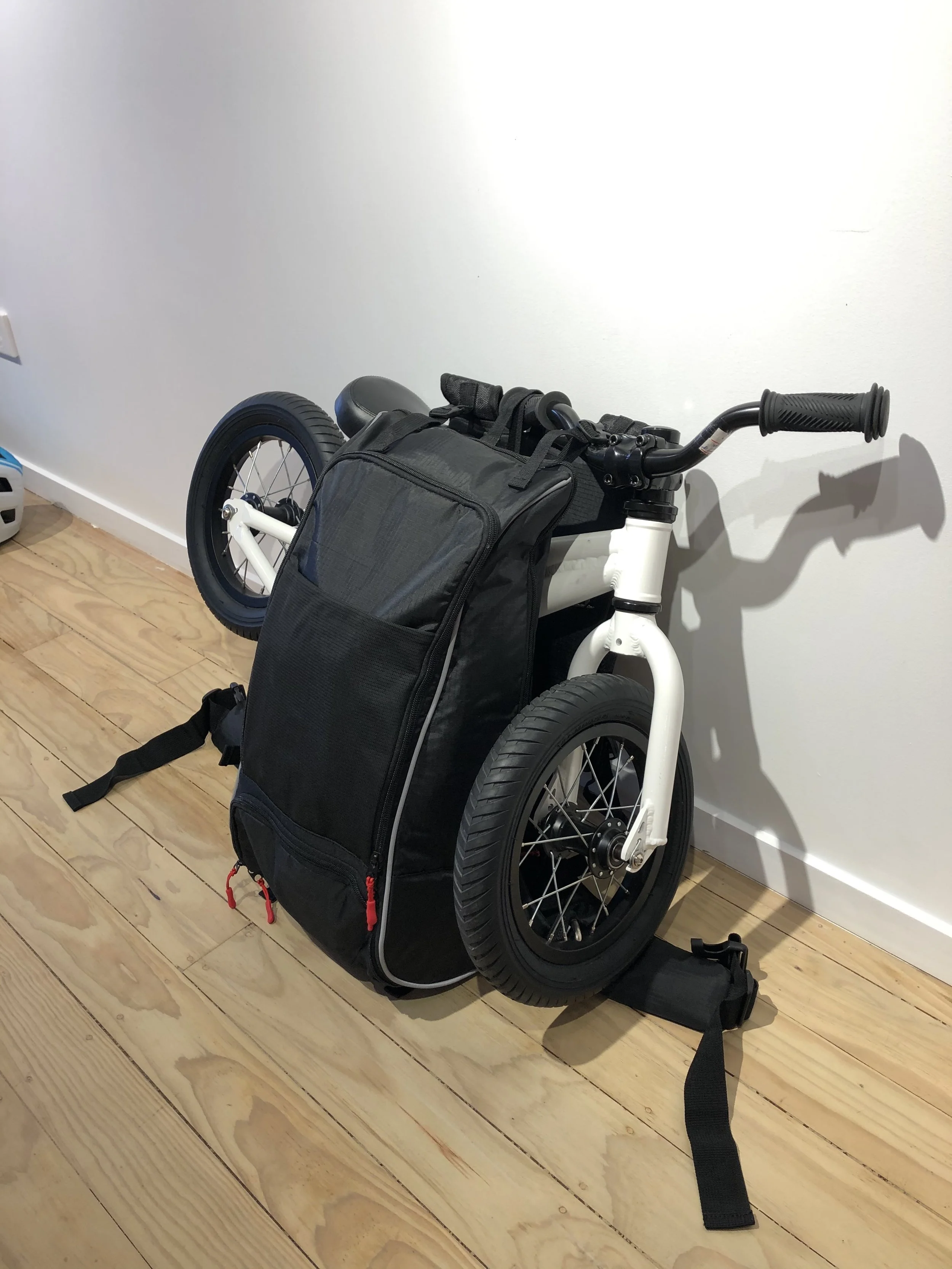
OUR TEST RIG: Using a couple of off-the-shelf backpacks, we modified them into a quick “test rig”; this low-cost, rapid approach let us validate our concepts and determine whether the approach was worth further development or required a different direction.
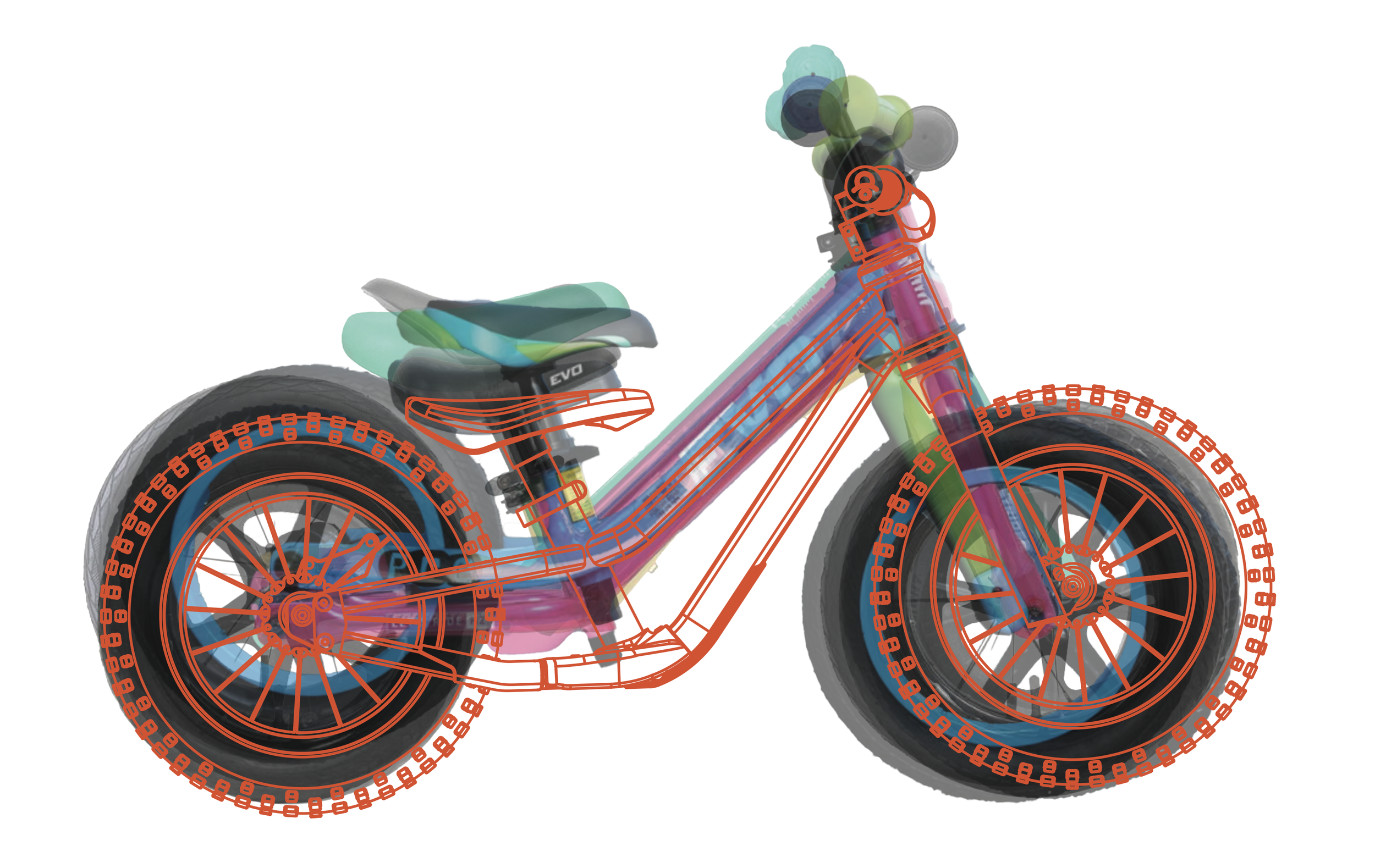
The test rig incorporated a lightweight alloy frame to provide a rigid platform capable of bearing the balance bike. We experimented with several orientations of the bike on the frame to determine which alignment minimised interference with the user and their bike while riding. Next, we tested with users of varied heights, genders, and body shapes to identify the physical extremes we needed to accommodate when finalising the bike placement and frame size. We also added simulated riding gear weight to the bag to observe how additional load altered the riding experience. After compiling the measurements and user feedback, we arrived at a preliminary set of dimensions for the bag and a recommended position for mounting the balance bike.
Outcome
Uplift has established a new category of dedicated carry systems within mountain biking. The project reframed a previously frustrating limitation into a new type of riding experience - enabling families to ride further into trail networks and extend the duration, range, and quality of rides with young children. The backpack introduced a new behavioural rhythm to family riding: ride, carry, repeat.
Parents can now shuttle children further into the forest using a shotgun seat, transition quickly into independent riding sections, then carry the bike during climbs or fatigue moments without interrupting the overall ride experience.
The product transformed what had traditionally been a compromise into an integrated system.
For Kids Ride Shotgun, the project expanded the brand beyond child bike accessories into a broader ecosystem of products supporting family trail riding culture. The backpack strengthened the brand’s positioning around enabling progression, participation, and shared riding experiences from the earliest age possible.
More importantly, the project demonstrated how industrial design can shape behaviour - not simply through aesthetics or function, but by removing friction from an experience people already want to have.
The result is a product that helps families ride further, stay out longer, and raise the next generation of mountain bikers.
For parents riding with kids, it can be tough to switch between balance bike and shotgun seat - to suit terrain. Our new backpack is designed to make this easier, allowing parents to venture further into the forest with their little ones – without having to ride one handed or leave the bike behind.— Dan - co-founder Kids Ride Shotgun
/ View other relevant work